

Needless to say, the world we face today—from the polarization of American politics to the ongoing wars in the Middle East and Eastern Europe, and the bloc confrontation between China and the U.S.—is, somehow, all the aftermath of 9/11.
It brings to mind Christopher Nolan’s recent film, The Odyssey.
In Nolan’s version, the most terrifying aspect of the Trojan War was the “aftermath” following the war. After enduring the brutal sacking and slaughter, the returning Greek coalition could not find a peaceful path home. Carrying trauma and disorientation, they drifted at sea and ultimately turned into the “Sea Peoples” who destroyed the entire Mediterranean civilization. Whether for Agamemnon or Odysseus, for everyone involved, that once-peaceful home was gone forever.
Isn’t this a brilliant metaphor for the 21st-century human condition?
After 9/11 in 2001, the 500,000-strong counterterrorism force that stormed into Afghanistan stayed longer than the Greek coalition ever fought at Troy. On the surface, the war took only a few months to overthrow a fragile enemy, but once this massive war power was assembled and released, it could never be put back in the bottle.
Over the next twenty years, this force—directly or indirectly—overthrew Saddam in Iraq, ignited civil wars in Syria and Libya, interspersed with the Arab Spring and the terrifying chaos of ISIS, until it completely reshaped the geopolitics of the Middle East, leaving a power vacuum for Iran to step into and eventually engage in direct military clashes with U.S. forces.
Meanwhile, the wars that broke out in Eastern Europe in 2014 and 2022 are equally tied to this aftermath—you could say an arrogant and aggressive U.S. rushed NATO expansion while ignoring Russia’s security concerns, or that a U.S. exhausted by the War on Terror and attempting a strategic retreat was no longer able to restrain a desperate Russia taking big risks, depending on your perspective.
As for the 6th Middle East war spreading from Gaza—between Israel, Iranian proxies, and Iran itself—it is also the latest rebound of this aftermath. The Syrian regime shifted, Iranian proxy forces were weakened, global anti-Semitic and anti-Western sentiment reached unprecedented levels, and Israel paid a massive price in international credibility. After all, in the view of the international community, Israel has long been seen as America’s ideological representative in the Middle East.
The more profound impact happened internally.
Within the United States, political struggles between the left and right swung violently, and a generalized mindset of “security above all” ultimately won—twice. This security anxiety completely reshaped America’s national character, replacing traditional Republican values with a more radical MAGA movement. On a global scale, anti-immigration, anti-globalization, and the trade war, tech war, and New Cold War (as Ferguson puts it) between China and the U.S. all escalated step by step within this paranoid post-9/11 atmosphere.
All of this is connected to that day in 2001.
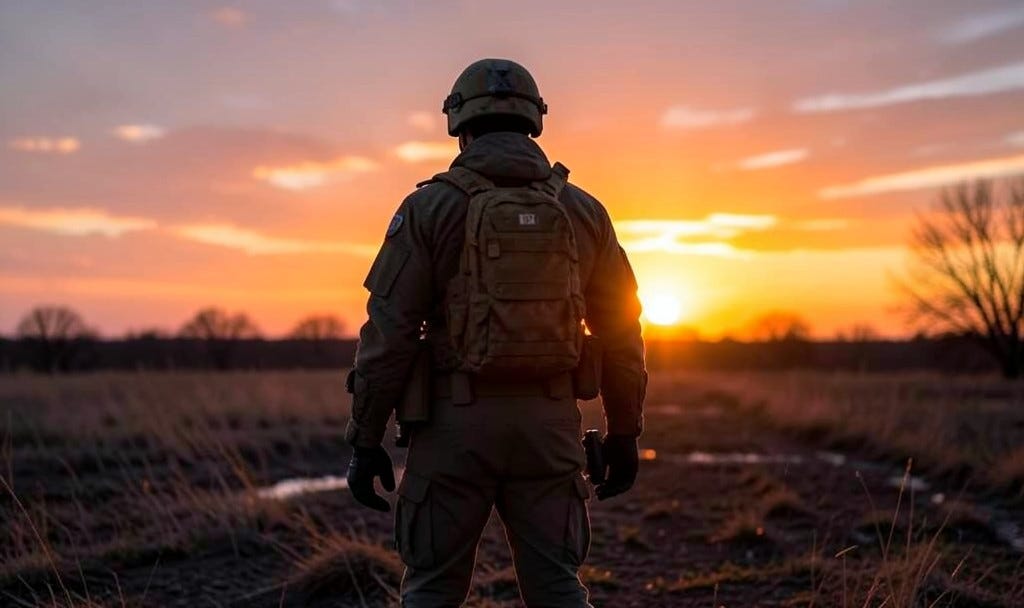
9/11 fundamentally altered America’s national character. It became like a classical hero suffering from PTSD in a Nolan film, swinging a heavy hammer in the dark for twenty years—at enemies, at phantom enemies, at allies, and at itself. It shattered the old order without ever figuring out how to establish a new one.
We have been living in the long retreat and aftermath of 9/11 all along. And this world, you could say, has yet to wake up from this psychological trauma.