

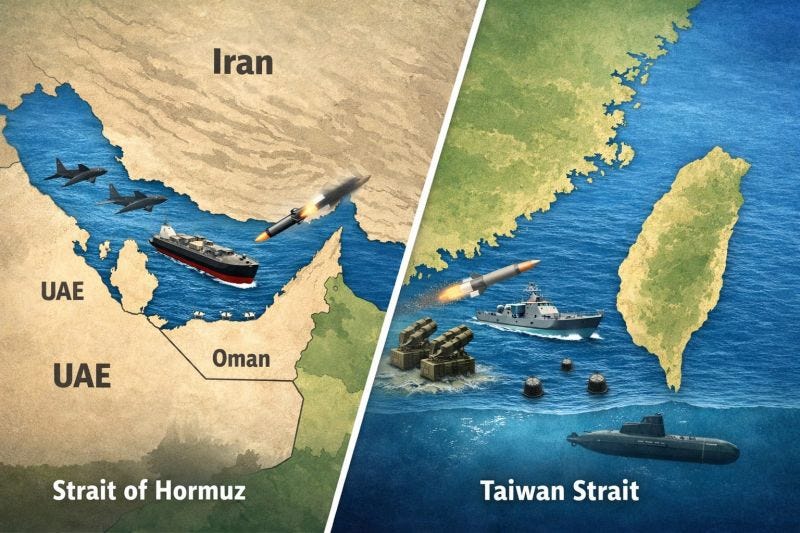
Well, the ongoing US-Iran war seems stuck in a classic lose-lose trap. Washington can’t walk away, but getting a deal done is brutally hard. It looks messy as hell. Plenty of big-name pundits have already spilled ink wringing their hands over how badly miscalculated this whole thing is. Instead of repeating all the doom and gloom, let’s skip that part entirely and take a look at how this looks from a global perspective—specifically, through the lens of Beijing.
Now, looking at China’s take isn’t a brand-new angle either. Take Paul Krugman, for instance. On August 3, he dropped a viral piece titled “How China Won the Iran War.”

Krugman’s take? Trump basically flushed America’s military reputation, financial leverage, and allied trust down the toilet—and handed global supremacy to Beijing on a silver platter.
When I reposted his article on Substack, I added a quick sanity check: “The US getting bogged down in the Middle East is obvious. But did China really ‘win’ here?”
This article is my attempt to answer Krugman’s anxiety.
Then there’s the historian Niall Ferguson. In a recent interview, he laid out a deeply pragmatic, no-nonsense breakdown of the Middle East crisis and its hidden domino effect on Taiwan.
Geopolitics is never a one-man show. To figure out what the 2026 Iran war actually means for the world, we can’t just watch Washington dig itself into a hole. We have to ask: Can Beijing actually capitalize on it?
Ferguson’s View: The “Third Gulf War” and the Taiwan Playbook
Before we try to read Beijing’s mind, let’s break down two core points Ferguson made:
This is the “Third Gulf War”—Not Vietnam, Not Iraq 2003
Ferguson warns us not to mix up today’s conflict with George W. Bush’s 2003 invasion of Iraq.
The 2003 mistake: Bush tried “nation-building.” Sending in massive ground boots to pull down Saddam and plant a Western-style democracy pushed the US into a twenty-year drain of money, troops, and political bandwidth.
The 2026 reality: Ferguson calls today’s war the “Third Gulf War.” The play here is completely different: a tactical strike relying on high-altitude precision munitions and decapitation strikes, executed without a multi-nation NATO coalition.
Washington has no desire to put boots on the ground, occupy territory, or build democracies for the Iranians. The strategy is purely technical: use unmatched intelligence and precise firepower to smash the regime’s command nodes, destroy its WMD infrastructure, and drain its missile and drone inventories.
That said, Ferguson throws up a red flag: an air-only war leaves a massive power vacuum for “The Day After.” If the regime collapses or freezes up, a fractured, ungoverned Iran could spark a refugee and regional disaster that looks nothing like a clean Western victory.
The Taiwan Strait Outweighs Hormuz
Ferguson puts the Strait of Hormuz side-by-side with the Taiwan Strait:
The Strait of Hormuz: Handles roughly 20% of global oil, along with LNG and fertilizer. Shutting it down hits traditional industrial energy prices and spikes inflation.
The Taiwan Strait: Controls over 90% of Nvidia’s top-tier GPUs and TSMC’s cutting-edge semiconductor chips.
In 2026, as the world dives headfirst into the AI revolution, the strategic weight of the Taiwan Strait blows Hormuz out of the water. A breakdown at Hormuz hits gas prices; a breakdown in Taiwan tanks global tech, Wall Street, and the foundation of the AI economy.
The “Lawfare” Playbook for Taiwan
Because semiconductors are so absurdly critical, Ferguson dismisses the dramatic headlines about a full-scale amphibious invasion of Taiwan or an old-school naval blockade. An amphibious assault is a logistical nightmare with zero recent combat practice, while a naval blockade is an explicit act of war that forces an immediate US military response.
Instead, Ferguson expects Beijing to run a gray-zone “Lawfare” play:
Beijing doesn’t need to drop bombs or declare a blockade. It can simply send in its Coast Guard and maritime safety ships under the banner of “sovereignty enforcement, customs checks, and contraband control.” It gradually takes over Taiwan’s sea and air corridors, promising to keep chip supply chains running normally—just under unified Chinese customs supervision.
This hands the White House a nasty dilemma: Does Washington swallow Taiwan becoming “the next Hong Kong,” or does the US military fire the first shot and escalate things into a full-scale big-power war?
How Beijing Sees Iran: Three Lenses and “Option D”
Quick disclaimers: As a Chinese-American, all my takes, models, and assumptions here come from public news, historical records, and tactical data. No secret insider scoops.
If you piece together open-source facts, official statements, and timelines, there are three distinct ways to explain how China views the Iran conflict:
Lens A: The Neutral Bystander
This matches Beijing’s official line and fits right in with Western anti-war commentators. The story goes: China hasn’t fought an overseas war in forty years. Its core needs in the Middle East are open shipping lanes, stable oil prices, and smooth trade. Iran is just another vendor in China’s energy supply chain. Beijing calling for a ceasefire is just basic support for international law. China, in this view, is simply a neutral third party.
Lens B: The Calculating Opportunist
This view sees Beijing as a pragmatic player shifting tactics as things unfold. Early on, Beijing did show a bit of a gamble mindset. The hope was that ongoing trouble in Europe and the Middle East would act like a 2026 version of “9/11”—soaking up US money and military focus, giving China another decade-long “window of strategic opportunity.”
That’s why Beijing rolled out the red carpet for former Iranian President Raisi, brokered the Saudi-Iran deal, and invited Palestinian factions to sign a reconciliation statement. There was a chunk of “wishful thinking” here: a belief that economic clout and soft-power diplomatic photos could replace hard military posture.
Then reality hit. The Saudi-Iran deal stalled, Hamas and Hezbollah leaders got wiped out, Syria shifted, and Iran’s underground nuclear facilities were blown up. The “Middle East distraction” collapsed under sheer military tech gap, handing Beijing a string of real diplomatic setbacks.
Lens C: New Cold War Realism
Fast-forward from the start of the US-China trade and tech wars in 2018. Niall Ferguson himself helped popularize the idea that a “New Cold War” had begun. Then came the dominoes: first Russia-Ukraine, then Gaza exploding into a full-scale US-Iran war. Conspiracy or not, from a certain perspective, this is all about China.
When a journalist pressed China’s Foreign Ministry on these conflicts, the spokesperson famously snapped back: “If China were actually involved, the battlefield wouldn’t look like this.”
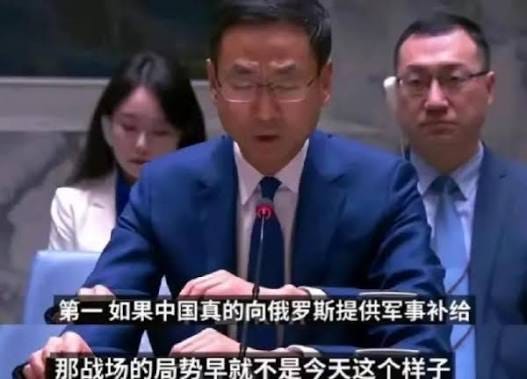
Realists read that response as a thinly veiled open secret: Iran and Russia are keeping their military gears turning partly because of subtle, low-level Chinese industrial and dual-use supply lines.
So why hasn’t Beijing gone all-in with massive, open military aid to Iran, like it did in Korea or Vietnam back in the day?
Simple: it’s not that China is unwilling to do so, but rather that the core conditions just aren’t there yet. Korea and Vietnam were right on China’s border—true “line-in-the-sand” national security threats. A theocratic regime in the Middle East, on the other hand, offers zero geographical overlap and zero shared ideology. Beijing isn’t going to blow up its remaining economic ties with the West over Tehran. Even in a worst-case New Cold War, China won’t step directly onto the field to fight Iran’s war.
Why Reality is Usually “Option D”
If this were a multiple-choice question on a standardized test, real-world politics almost always lands on “Option D: None of the above are completely right.”
Option A ignores Beijing’s obvious diplomatic tilts. Option B overstates how much control Beijing actually has while ignoring its clear miscalculations in the Middle East. Option C mistakes today’s China for the old Soviet Union, ignoring how dependent Beijing is on global markets.
Only Option D—mixing together Beijing’s trial-and-error, its setbacks, its tactical reality-checks, and its awareness of its own economic vulnerabilities—helps us answer the million-dollar question: How does this war in the Middle East change Beijing’s math on Taiwan?
From Iran to Taiwan: Shock Waves and Strategic Caution
Back between 2022 and 2024, some analysts predicted a chain reaction: if Russia held off NATO and Iran bogged down the US, a global axis might form, tempting Beijing to use the chaos to push up its timeline on Taiwan.
That line of dominoes required too many things to go right. By 2026, the script flipped: Ukraine held its lines, Middle Eastern proxy networks were dismantled, and the US and Israel gutted Iran’s military capabilities.
For Beijing, watching this play out didn’t bring “let’s attack Taiwan” energy. It delivered a massive tactical reality check.
1. A Relived 1991 Moment
In the 1991 Gulf War, the US military demolished a Soviet-equipped Iraqi army with high-tech, precision-guided air power. That single war shocked Beijing’s military leadership into abandoning human-wave tactics and kicking off a thirty-year drive toward a modern, high-tech force.
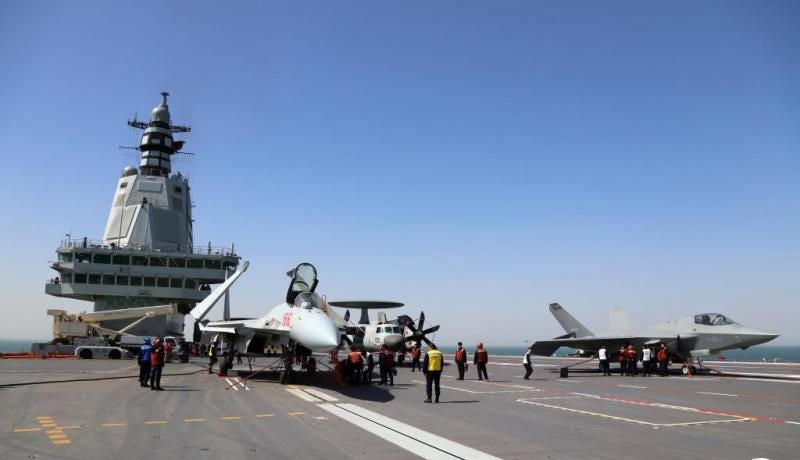
Fast-forward to 2026. Seeing F-35s and US-Israeli forces display total sensor-to-shooter dominance, real-time tracking, and instant decapitation strikes brought back that old feeling. It highlighted a painful truth: China can build modern hardware, but it lacks real-world combat experience in large-scale, high-tech warfare. And that missing piece is a glaring liability for any Taiwan plan.
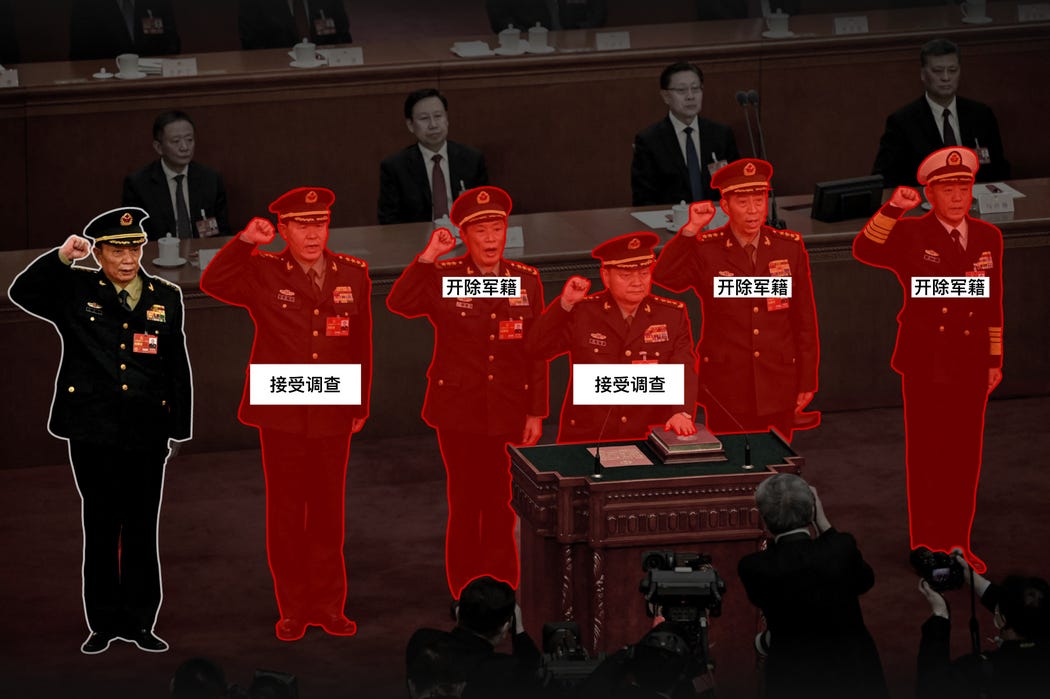
This explains the recent massive shake-ups and corruption cleanups within top Chinese military ranks.It isn’t a sign of “getting ready to invade tomorrow.” It’s an internal audit showing that real combat readiness fell way short of the paperwork. When smart leaders realize there’s a gap between reality and reports, they pump the brakes. Beijing is pulling its attention back inside, focusing hard on a shaky domestic economy and local debt problems.
2. Busting the “Axis of Four” Myth
We can also toss out the Western media trope about a unified “China-Russia-Iran-North Korea” axis. These four countries have conflicting interests, massive ideological gaps, and huge geographic distances separating them. They simply don’t have the physical setup—or the trust—to run joint military campaigns.
I could dive deep into the history books to explain how any two of these four clash ideologically, how their attempts to align interests fall apart, and why this coalition fails for fundamental historical reasons. But I won’t go down that rabbit hole here—I’ll save that deep dive for a future essay or two.
My point here is simple: this theoretical axis failed to materialize in the real world largely because both Ukraine and Israel outperformed expectations. Because neither battlefield turned out favorably for the proxy powers, the dynamic momentum needed to weld these four into a true, operational alliance never built up. That’s just the raw dynamics of history at work.
Military historian Victor Davis Hanson once pointed out that Western military power relies heavily on civic participation, industrial scale, and rapid tactical adaptation. The performance of Ukraine and Israel under existential threat proved his point again. The crises in Europe, the Middle East, and Asia didn’t explode all at once; they played out separately, draining the risk of a global war.
Gosh, I don’t think most people realize just how lucky we are—or how deeply grateful we should be—that all these terrible things didn’t happen at the exact same time.
3. Taiwan Isn’t a Sheep—It’s a Porcupine
Let’s re-examine Ferguson’s “Lawfare” takeover theory. His model assumes Taiwan just sits there like a passive sheep while Beijing rolls in customs checks.
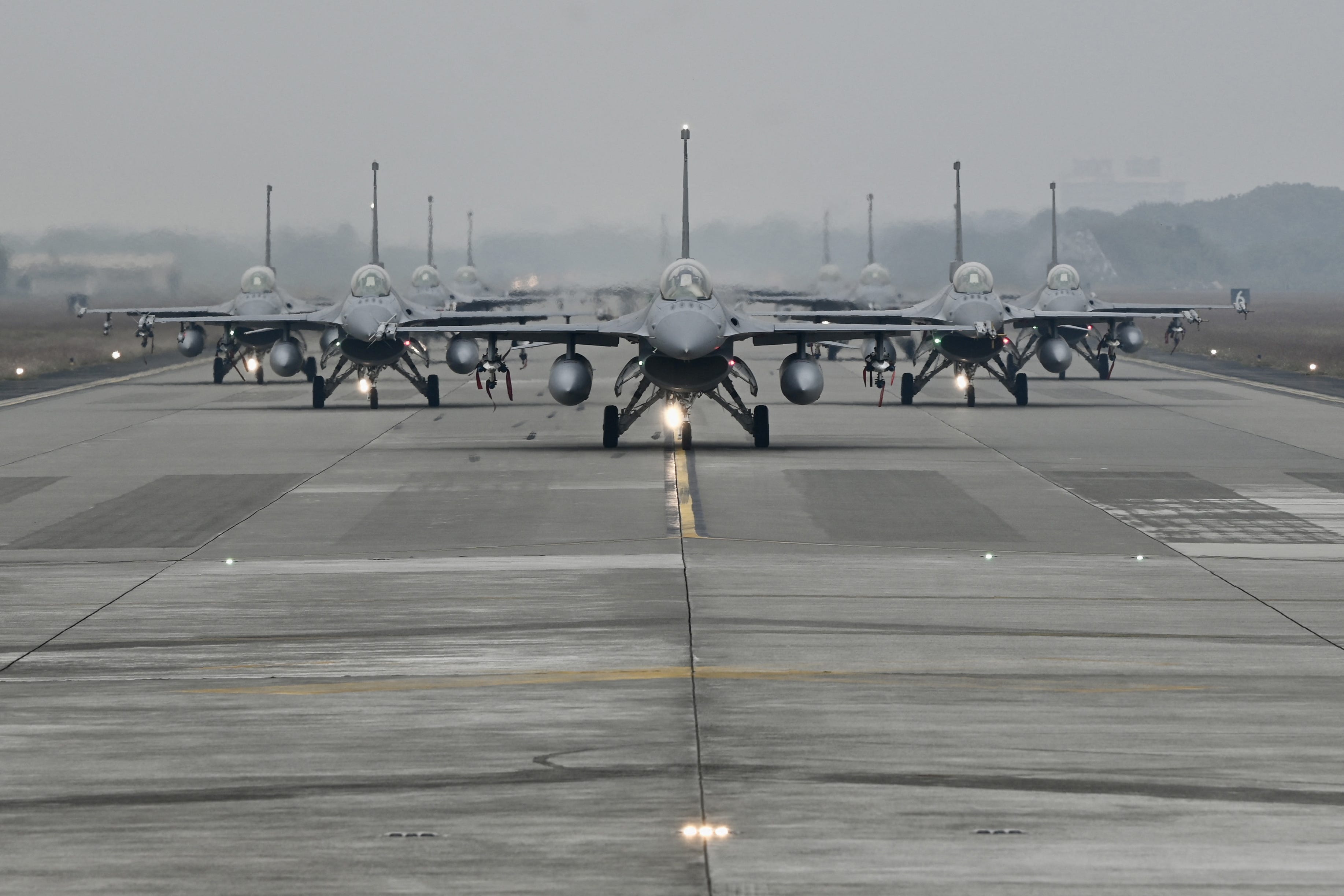
In reality, Taiwan is a razor-sharp porcupine covered in spines. From its island geography and hardened fortifications to its ultra-dense precision strike systems and high public alertness, Taiwan’s defensive baseline is far better than Ukraine’s. On top of that, there are way more international players surrounding the Taiwan Strait than in the Middle East or Eastern Ukraine, and global scrutiny is off the charts. Any low-intensity “gray-zone pressure,” the moment it touches this porcupine, can easily spiral out of control into an unpredictable, systemic big-power conflict. Executing this kind of “lawfare” operation carries a level of difficulty and risk that is no lower than a direct military assault.
So, frankly, I don’t think Ferguson’s scenario—using a “quasi-war gray blockade” as a substitute for real conflict—has any real chance of succeeding.
4. A Surprisingly Optimistic, Yet Cautious Conclusion
Now, standing here in the second half of 2026, we can probably arrive at a cautious, yet surprisingly optimistic conclusion: from now through 2027—and all the way out to 2030—the risk of a full-scale direct military conflict over Taiwan hasn’t gone up. It has actually gone down.
This doesn’t mean friction in the Taiwan Strait will disappear. It means a crisis that has already been live-rehearsed is no longer as terrifying or unpredictable.
Look, before the outbreak of the Iran war in 2026, international wargames over a Taiwan crisis existed purely in abstract, theoretical models. But with the destruction of Iranian nuclear facilities, real-world drills of high-altitude precision decapitation strikes, and the live conflict playing out in the Strait of Hormuz, the operational dynamics, air-defense depletion costs, supply chain fallout, and decapitation risks of a potential Taiwan crisis have just been pre-enacted and shown to the entire world by the US and Israel.
Having watched this entire tactical rehearsal play out and audited its own internal readiness, Beijing has no rational reason to back itself into a corner and trigger a Taiwan crisis on purpose. Doing so would mean burning forty years of accumulated economic gains from reform and opening-up to the ground, forcing the nation onto a path of ruin it simply cannot afford.
As for what happens after 2030, an irreversible demographic shift will push Chinese society into a deeply aging phase, though one that remains wealthy in aggregate, with a public mindset gradually settling down into a cooler, calmer baseline. It’s a process very similar to Japan entering its “Lost Decades” post-1995.
By that point, the cooling of nationalist passions will strip away the societal soil needed for wild military adventures. The Taiwan Strait is far more likely to settle into a long-term, stable state: a delicate balance where everyone understands the unspoken rules, and nobody pulls the pin.
Well, this might not be the grand dramatic finale that zealots on either side dream of. But in the brutal reality of great power competition, this is likely the best outcome any of us could hope to achieve.
4. Unless the Worst-Case Scenario Happens...
Let me circle back to Paul Krugman’s August 3 piece, “How China Won the Iran War.”
Krugman argued that America handed over global leadership. I asked: “Did China really win?”
My answer is no. Beijing’s Middle East strategy fizzled out. It lost a key anti-US buffer in the region. Even if America looks messy, China didn’t win anything.
Unless... we hit the absolute worst-case black swan:
What if the US gets completely dragged down in Iran, dumping endless ammo, money, and political capital into the sand while alienating its allies? What if Iran somehow defies the odds—like or unlike but better than Afghanistan, Iraq, or Libya—and grinds the war into a years-long stalemate?
John Mearsheimer threw out a vivid comparison for this back in late July: “A repeat of Vietnam.”

I don’t think Iran has the physical setup to turn into Vietnam. But IF Washington gets stuck in an agonizing, endless quagmire, every calculation in this article breaks down:
Krugman would be right—America loses. Ferguson would be right too—Beijing could get much bolder with its “Lawfare” tactics, squeeze Taiwan, and maybe even pull the trigger on a 2027 timeline.
If those warning lights start flashing, oh boy, stop worrying about gas prices and inflation. Turn your eyes East. Forget Iran—it’ll be time to really worry about the Taiwan Strait.
So why is this high-tech air campaign getting so jammed up in the first place? Why is the most advanced military on Earth finding itself stuck in a painful, wildly expensive non-symmetric war against Iran?
In the next article, we’ll bring in Andrew Mack’s groundbreaking 1975 theory on asymmetric warfare to break down why big powers run into hard political and economic walls when fighting smaller enemies.