

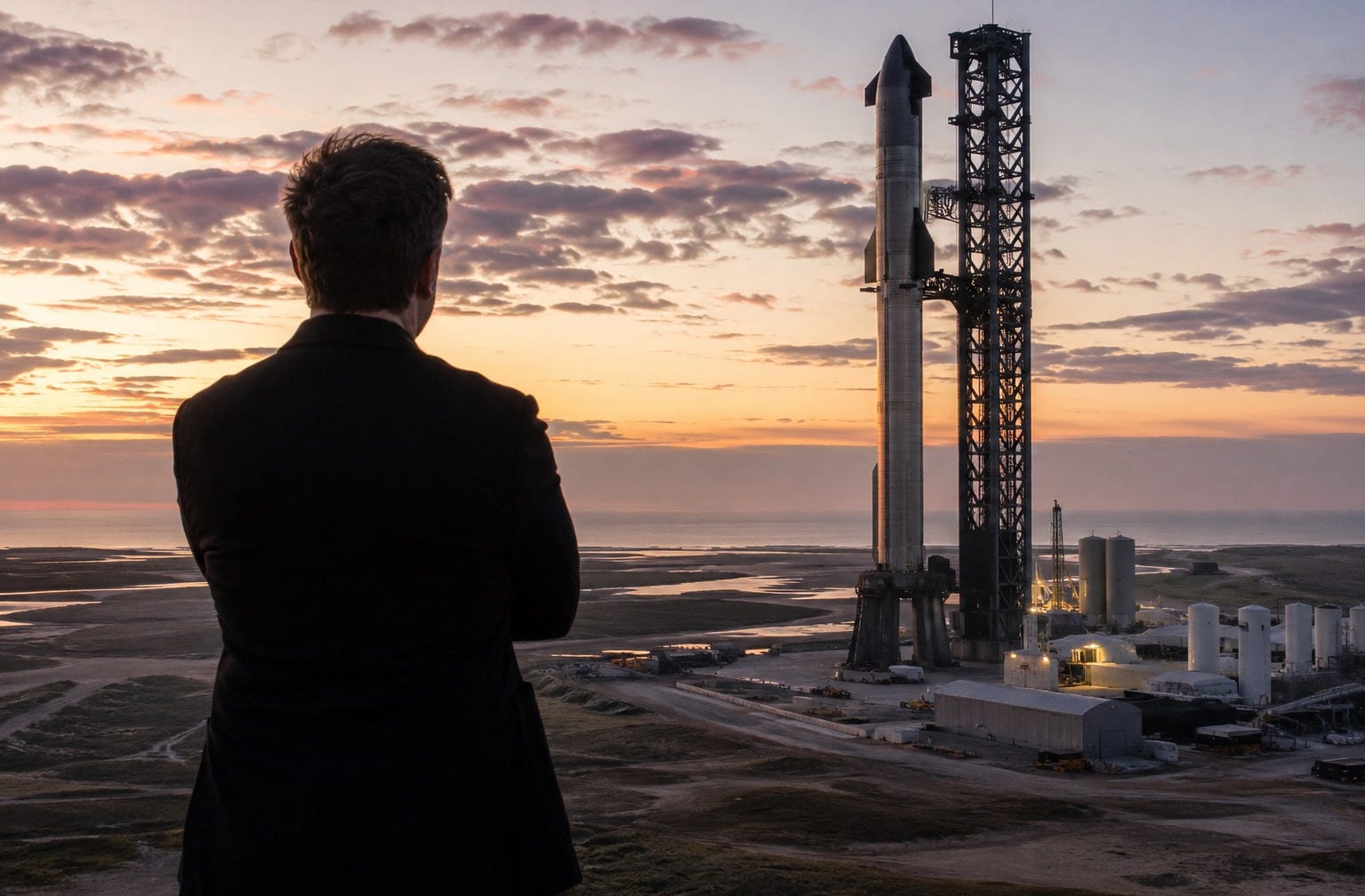
❓ Is SpaceX Worth That Much?
In mid-June 2026, Nasdaq is witnessing a coronation of capital rarely seen in human commercial history.
While Elon Musk’s Tesla (TSLA) is down on the ground, locked in a brutal dogfight with global automakers over razor-thin profit margins, his other ace in the hole—SpaceX (Ticker: SPCX)—has officially gone public. Priced at $135 a share, it instantly raised $7.5 billion to $8.6 billion in cold, hard cash on the open market. On its trading debut, SPCX’s market value, like a Starship on ignition, blasted straight past $2.1 trillion.
What does $2.1 trillion even mean?
It means Musk, holding a 42% stake, has officially crossed the threshold into a personal net worth of over $1.05 trillion. He, all by himself, has become humanity’s first genuine, verified “Trillionaire,” possessing wealth equivalent to one-third of the entire market cap of every listed company on the UK’s FTSE 100 index combined.
It is indeed insane. Some professional critics are crying out that “the global capital markets have collectively lost their minds,” cursing this as a monumental bubble doomed to burst. Maybe so. Bubbles happen, and they always burst sooner or later; there is nothing new under the sun. But SpaceX is truly worth talking about—simply put, because it is uniquely special.
Most people’s understanding of wealth never moves past current accounting ledgers and P/E ratios. How forgetful are they? So forgetful that they completely fail to remember the 1963 and 1970s, and the raw awe with which humanity watched NASA engineer the miracle of the Apollo moon landings. Back then, people genuinely believed that by the turn of the millennium, we would already have an established base on Mars.
But the moment the Cold War ended, stripping away the irrational blood transfusions of state-versus-state rivalry, the space myth of the state-run system rapidly decayed. Humanity quickly grew bored of the sea of stars, turned around, and retreated into that thin, shallow layer of dirt on Earth.
If you step away from mundane quarterly reports and look at this from a higher dimension, you realize that global capital, at this exact moment, is displaying a rare streak of lucidity. The $2 trillion valuation handed to SpaceX might not be a capital bubble at all, but rather the world’s top-tier money buying a ticket to break the stalemate, investing in humanity’s only true “external gravitational field.”
From a certain angle, humanity is currently trapped in an extreme, hyper-internalized grind over existing resources on Earth. The grinding attrition in Ukraine, the quagmire in the Middle East, the friction along the edges of the South China Sea—the cold truth behind this internal warfare is brutal: the Age of Discovery, the colonial and post-colonial eras are long gone. Every square inch of soil and every single market on Earth is packed tight.
Since we haven’t baked a new cake in a very long time, the remaining 8 billion people have no choice but to viciously tear into each other over the existing pieces. It’s exactly like the civilizational tragedy Liu Cixin wrote about in The Three-Body Problem—apologies, I love this novel too much, but applying it to Musk and SpaceX is by no means an exaggeration; it fits perfectly.

Looking at the issue from the height of Three-Body, if an alien race were heading our way to wipe out Earth in two or three hundred years, out of 8 billion people, Musk might be the only one actually doing real work. He is still stubbornly using physics and first principles to figure out the “expansion of civilization’s external boundaries”—the one thing that actually dictates human destiny.
Sounds too much like science fiction? Yet curiously, the capital market believed it this time and was willing to place its bets. The bedrock gravity behind that $2 trillion isn’t about how many satellites SpaceX launched; it’s because SpaceX represents the only possibility for human civilization to extend its boundaries outward from this desperate internal grind.
❓ What are the American Elites Anxious About?
Inside the United States, this $2 trillion coronation hasn’t been met with pure applause. Instead, it has triggered a wave of intense skepticism from the elite class.
Left-wing establishment figures, mainstream media, and Senator Elizabeth Warren have their eyes glued to that thirteen-digit string of numbers representing Musk’s personal wealth. On the eve of the IPO, she went so far as to publicly write to the Securities and Exchange Commission (SEC), demanding they delay the listing. In their narrative, that string of digits is the ultimate smoking gun of wealth inequality and tax injustice.
The critique from economists and market observers is more specific. Paul Krugman, for instance, has taken some incredibly harsh swings at SpaceX recently, publicly declaring that it is essentially a “Ponzi scheme built on a grand story.” Krugman lays out two main objections:
First, SpaceX’s current astronomical valuation is built entirely on people paying for a distant, illusory future story (like interplanetary colonization), while its actual, current business cannot support that number. Second, as SpaceX goes public and is either passively or actively bundled into major indices, a massive wave of ordinary retail investors—who have zero interest in mars colonization and just want a stable investment—will be forced to take on the risk of SpaceX’s highly volatile assets.
These critical voices have gained massive volume in the American media landscape. Actually, I completely agree with Krugman’s charges.
However, if you widen the lens, you spot a fascinating contrast: while the elites in Washington and New York are subjecting Musk to severe scrutiny, across the ocean in China, a completely different, almost bizarre “Musk Effect” is playing out.
❓ What Kind of Jokes Did the Chinese Tech Circle Leave Behind in Those Years?
Since we are talking about China, we need to rewind the tape a few years and flip the camera over to the other side of the ocean.
Interestingly, the first group in China to harbor hostility and mockery toward Musk wasn’t the politicians. It was the tech and aerospace circles, who back then were flying high and feeling smug under the “Rise of a Great Power” narrative. Since we are chronicling history, it’s worth lining up those arrogant statements from back then to help everyone refresh their memory:
Around 2019, the founder of a prominent domestic EV startup bluntly claimed in a public keynote: “Tesla’s Autopilot isn’t all that. Whatever he knows, I know. Chinese car companies can absolutely overtake him on the bend.”
Within the traditional aerospace establishment, a chief rocket designer confidently stated during a seminar: “Reusable rockets are a dead end. The propulsion system is too complex, the leftover propellant and structural dead weight are impossible to solve. It makes zero sense commercially. We should stick to honest, reliable expendable rockets.”
And in the telecom industry, a well-known academician publicly asserted: “Starlink using low-Earth orbit satellites to broadcast network base stations just proves Musk doesn’t understand modern communications engineering. LEO satellites have limited bandwidth; it’s pure capital hype. 5G is the future.”
An academician from the Chinese Academy of Sciences once chimed in: “Why go to Mars? Earth’s deserts and wastes are ten thousand times more habitable than Mars. Is anyone willing to live in the desert?”
Even in a highly publicized, top-tier dialogue, Jack Ma showed blatant disdain for Mars exploration, arguing that “taking care of Earth” was far more practical than a vague, ethereal sea of stars.
To be fair, the Chinese aerospace sector has achieved incredibly solid, permanent, and objective milestones over the years—its long-term habitation of the space station (Tiangong), the Chang’e lunar exploration missions, and its manned moon landing roadmap. It carries a heavy political gravity for national cohesion, boosting national self-confidence. There is absolutely no doubt about that.
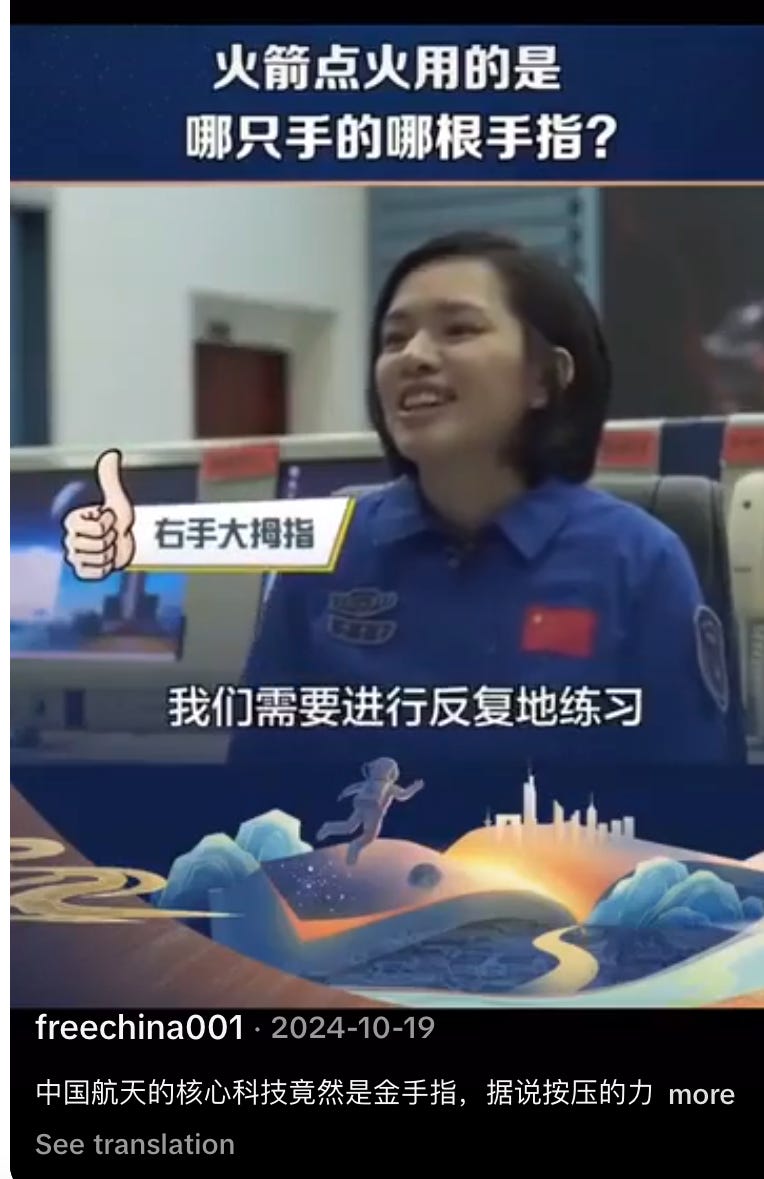
The problem lies in the propaganda. The state media apparatus has long been addicted to a workshop-of-suffering narrative left over from the agricultural and handicraft eras—glorifying “propellant carvers (火药雕刻师)” who hand-carve solid rocket fuel with knives, or “golden fingers (金手指)” who blind-operate launches based on decades of raw experience.
Then along came SpaceX with a thoroughly “modernized industrial mass-production narrative.” The moment the stainless-steel Starship and Falcon 9 proved that launching rockets could be streamlined, assembly-lined, and hyper-iterated just like building a Ford Model T, that raw transparency instantly turned China’s flesh-and-blood workshop propaganda into an awkward case of “The Emperor’s New Clothes.”
Let’s run a cold, hard ledger here: Musk, essentially single-handedly, beat three massive state-run space apparatuses—the American NASA establishment, Roscosmos, and China’s state-owned enterprise battalions.
Looking at it from this angle, is SpaceX expensive? And how much astronomical, taxpayer-funded public money have these state-run space agencies swallowed up over all these decades?
❓ Then Flip-Flop: How the Chinese Public Got Hooked Overnight
The moment the Falcon 9 stuck its landing on a sea recovery platform like a boomerang, and the moment Starlink fundamentally disrupted global tactical communications, those loud-mouthed Chinese critics instantly found themselves utterly silenced and humiliated.
One of the fascinating things about China is that its policy and public opinion can pull a 180-degree turn completely out of nowhere. When it came to Musk, public sentiment shifted instantly from mockery to wild, unadulterated worship.
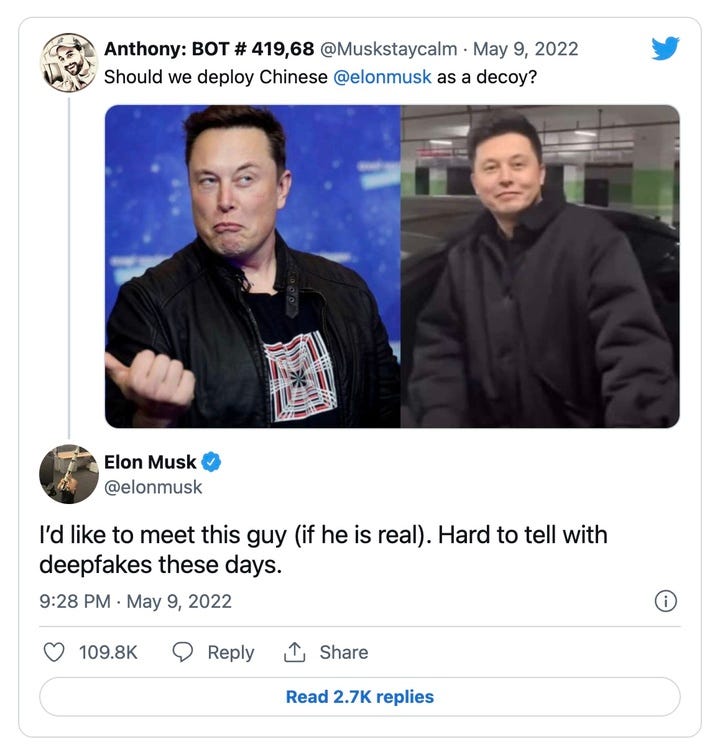
The sheer volume of Musk fans on the ground exploded exponentially. The tech circle began taking apart his “first principles” pixel by pixel. A Chinese content creator on Douyin who happened to look exactly like Musk even blew up, drawing direct engagement from Musk himself.
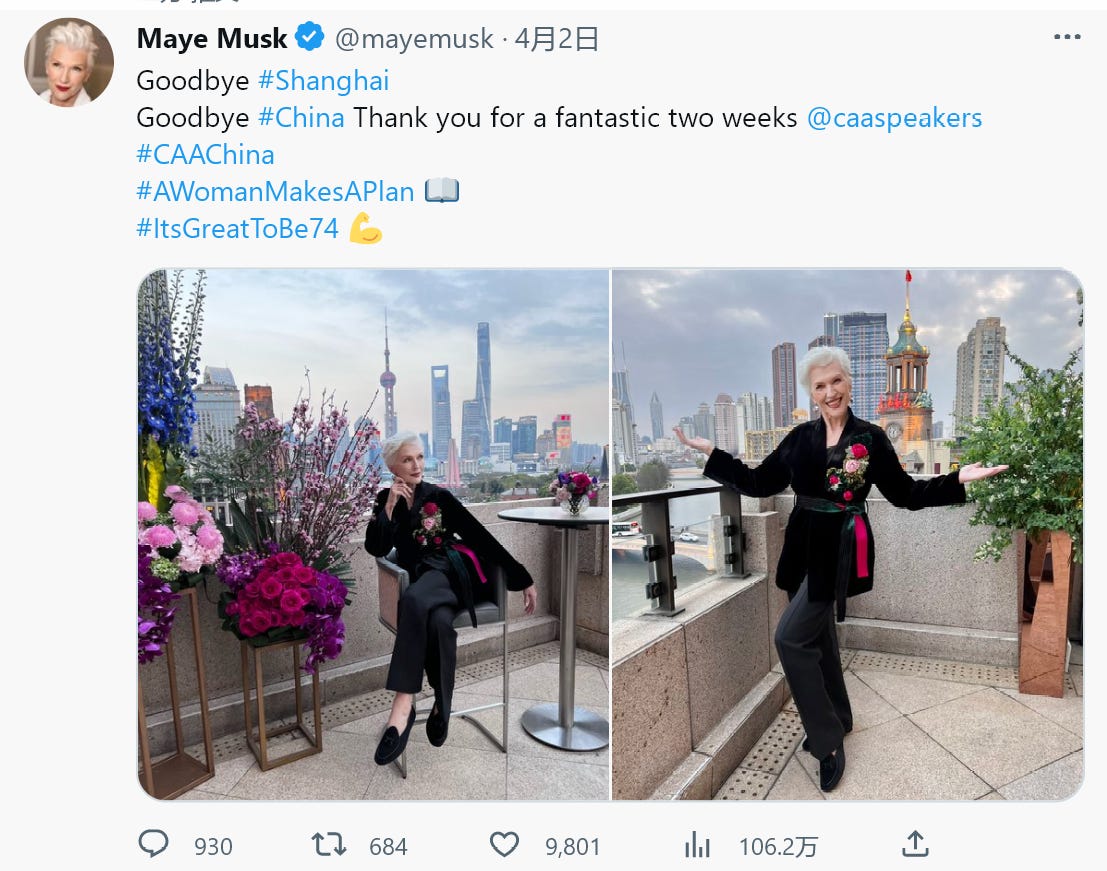
Even more surreal was the “cultural phenomenon” triggered by his mother, Maye Musk. This white-haired matriarch became a high-frequency visitor to China, amassing millions of followers across Xiaohongshu and Douyin. She walked red carpets in major cities, hosted book signings, and endorsed everything from domestic Chinese smartphones to high-end mattresses, becoming the ultimate totem of “successful parenting” and independent womanhood for the Chinese middle class.
In the place most ideologically opposed to everything he represents, the Musk family won the purest form of technological and worldly deference.
❓ Who Was the Very First Person to See Musk’s Full Strategic Value?
Grassroots frenzy and fan worship don’t actually matter on a macro level. What truly matters is that eight years ago, a top-tier technical bureaucrat within the highest echelons of Chinese political leadership accurately and coldly calculated Musk’s full strategic value. That man was the official then running Shanghai, and currently China’s number-two official: Li Qiang.
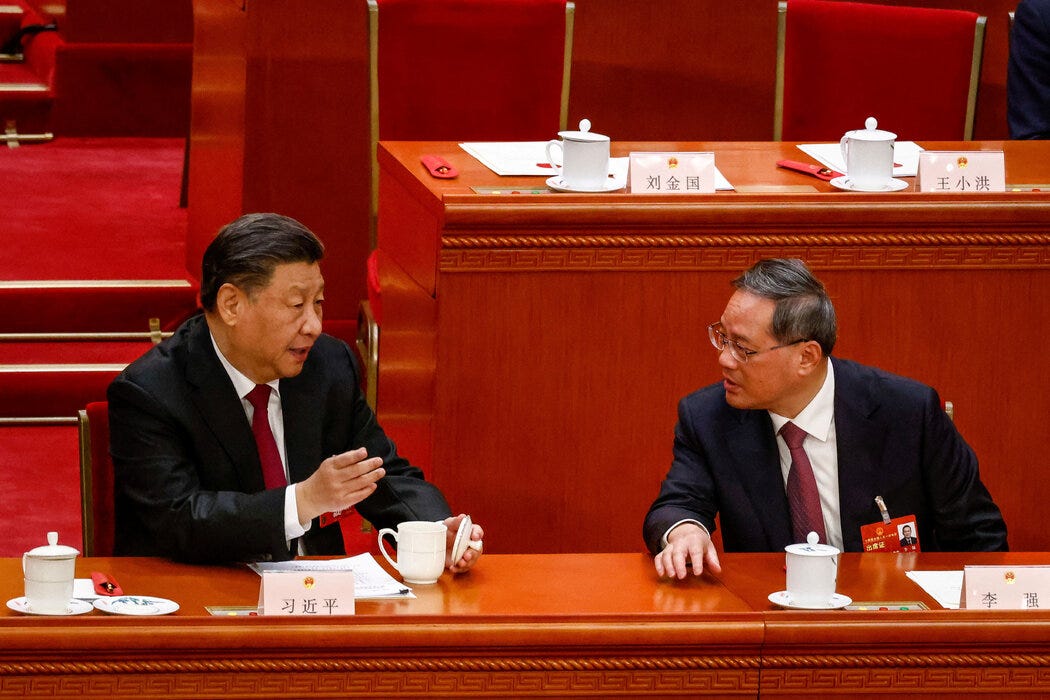
Is everyone sitting tight? I’m going to start telling a story.
The 2018 negotiations over the Shanghai Gigafactory are a piece of earth-shattering history that has been entirely scrubbed from most people’s memories.
Let’s establish some background knowledge first. Ever since Germany’s Volkswagen entered China in the 1980s, the playbook for foreign automakers was written in stone: you must form a joint venture (foreign ownership capped at 50%), and you must transfer technology in exchange for market access. China originally approached Tesla with this exact same script, and the Ministry of Commerce and the Ministry of Industry and Information Technology maintained a fiercely rigid stance.
The external environment at the time was already a powder keg. The US-China trade war had officially erupted. Washington was quietly drafting legislation to pull supply chains out of China over dependency risks, while Beijing was preaching “domestic internal circulation,” and online nationalist, anti-foreign sentiment at home was boiling over.
The negotiations hit a dead end over the mandatory tech-transfer clause. On March 8, 2018, Musk took to Twitter, publicly tagging then-US President Donald Trump, writing in frustration: “An American car going to China pays 25% import duty, but a Chinese car coming to the US only pays 2.5%. A 10X difference. Do you think this is fair?” He followed up with: “This is like competing in an Olympic race wearing lead shoes.”
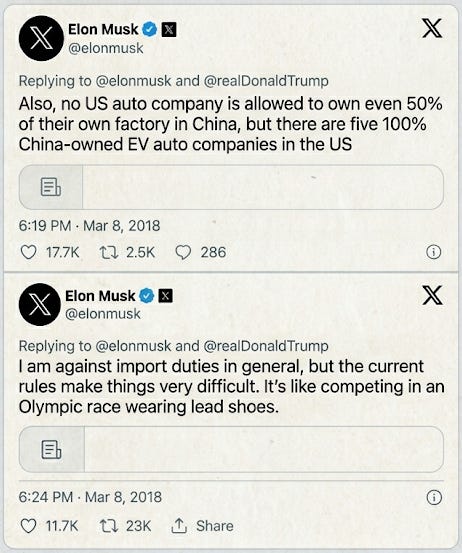
At that moment, everyone assumed the deal was completely dead, and that Tesla would break with China for good, getting dragged deep into the trade war.
Yet, the plot twist came at breakneck speed.
A mere month after Musk’s tweets, on April 17, 2018, the National Development and Reform Commission dropped a bombshell announcement: China would eliminate foreign ownership caps on new energy vehicles.
Only after the fact did the world find out it was Li Qiang, running Shanghai, who displayed masterclass technocratic execution and maneuverability. He pushed through immense pressure from ministries in Beijing and the entrenched interest groups of domestic traditional auto giants. He single-handedly tore up a forty-year-old iron rule of foreign investment management, granting Tesla a special exemption to become the first foreign car company in Chinese history to build a wholly-owned factory without forced technology transfer.
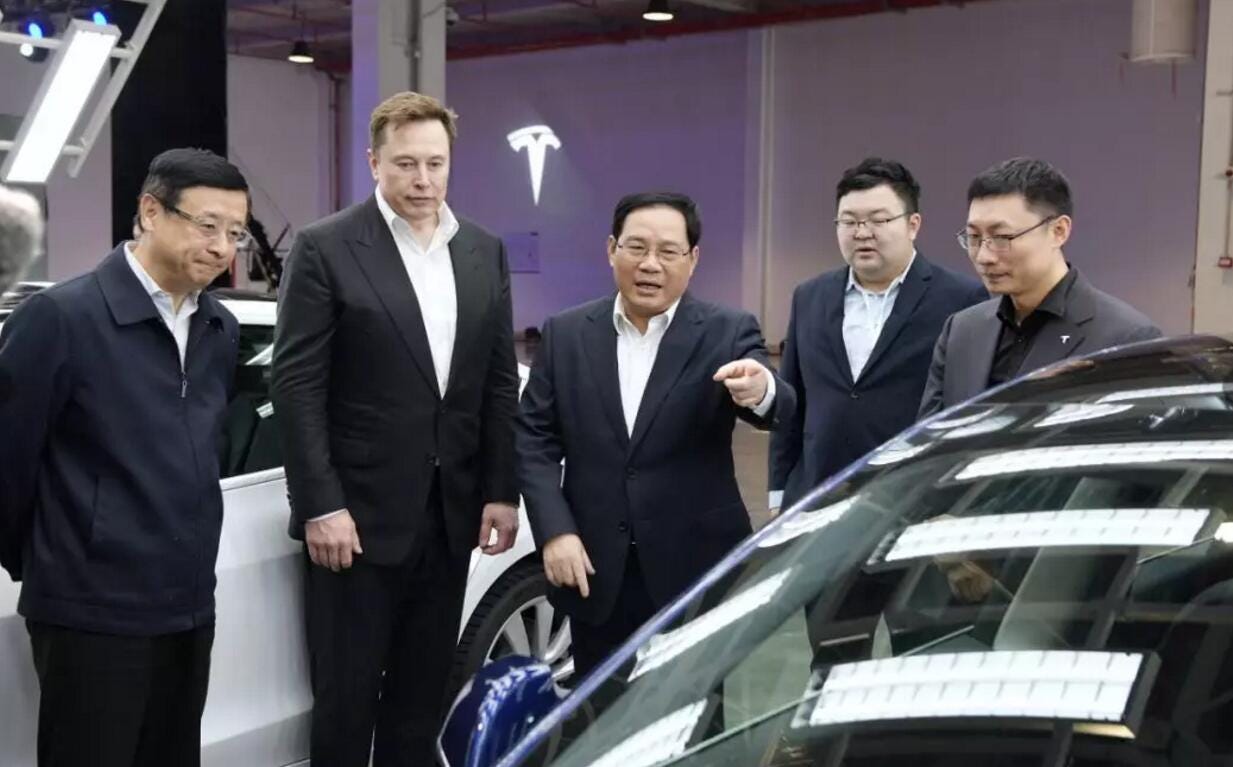
China showed unprecedented flexibility and sincerity in those talks. What followed was a logistical myth: Shanghai rolled out extraordinary green lights. Amidst wind and rain, Li Qiang and Musk stood together, shoveling dirt at the groundbreaking ceremony. Under 24/7 regulatory fast-tracking and Spartan construction efficiency, the Tesla Shanghai Gigafactory achieved a global industrial miracle—groundbreaking, completion, production, and delivery all within a single calendar year—literally pulling a nearly bankrupt Musk, who was being tortured to death by production hell, back from the edge of the grave.
❓ What Kind of Supply Chain Chess Game Did China Build Around Musk?
Li Qiang’s sudden concession and retreat were actually the blueprint for a cold-blooded “Super Capture” play. To see this move clearly, we need to bring in another historical figure for comparison.
Back in the day, Zhu Rongji brought in Foxconn and Apple’s manufacturing standards. It looked like letting a wolf into the house, but it was actually a move to use Apple’s brutal standards to domesticate and force out China’s first generation of a complete smartphone supply chain—which paved the way for Huawei, Xiaomi, OPPO, and VIVO.
Li Qiang bringing in Tesla came from the exact same playbook. China didn’t care about Tesla’s technology transfer because what China wanted was for Tesla to force the localization rate of its entire EV and power battery supply chain up to 95% within a few years.
Tesla became the “catfish” dropped into the stagnant pond. On Chinese soil, it forced the creation of the most terrifyingly complete, most robust EV supply chain on Earth, which ended up incubating today’s BYD, NIO, XPeng, and Zeekr.
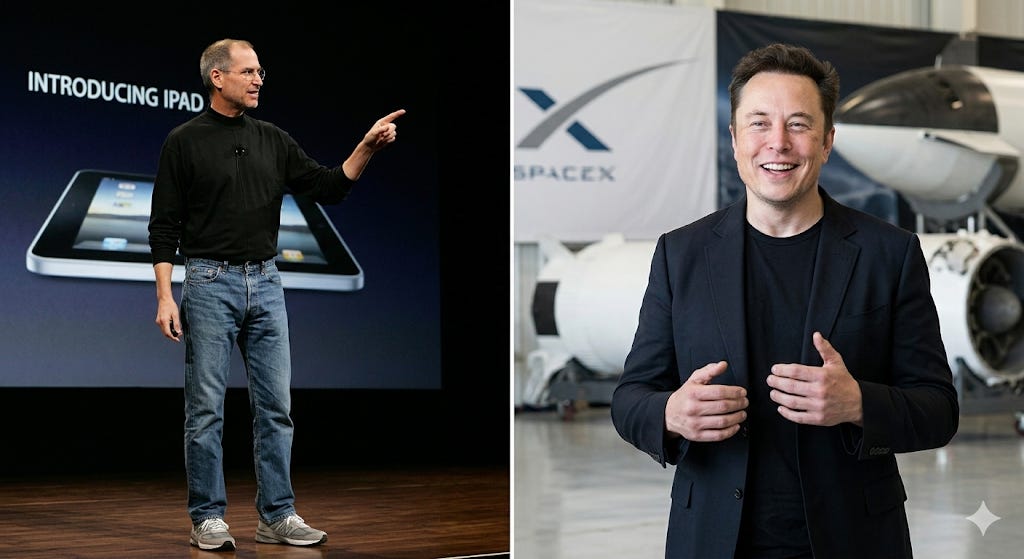
There is a brilliant, cross-generational contrast to be drawn here: Steve Jobs vs. Elon Musk.
Even though Jobs had a massive, cult-like following in China and Apple fundamentally reshaped the country, the deep irony is that Jobs never once set foot in China during his lifetime. Even though Zen Buddhism, which deeply influenced his inner world, originated in China, a young Jobs preferred to travel to India to find his spiritual grounding, showing zero intellectual interest in China. Throughout his life, his highest praise for industrial aesthetics was reserved for Japan’s Sony.
This absence speaks volumes about the subtext of that era: the China of Jobs’ time was merely a cheap assembly line, having yet to display any inherent capability in advanced manufacturing or master engineering.
But by the time we get to the era of Musk, a man driven by first principles, he doesn’t come to China for spiritual alignment. He comes to find the world’s most elite battery supply chains, engineers who out-work anyone on Earth, and technocrats willing to rewrite the rules for productivity. China has grown into a global industrial beast capable of brute-forcing entire supply chains into existence.
Musk’s early trajectory in North America apparently brought him into contact with some brilliant overseas Chinese minds, experiences that seem to have left a highly positive impression, and his later unique attitude toward Chinese professionals reflects this. Unlike traditional Silicon Valley tech giants that have seen their leadership ranks heavily “Indianized” alongside an obsession with corporate PPT slide decks, Musk has openly shown a deep, borderline obsessive admiration for the hyper-professional, sleepless execution of Chinese elites throughout his career.
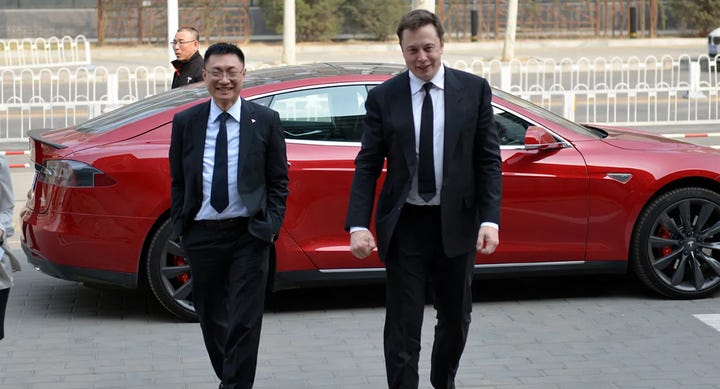
The unsung hero of the Shanghai Gigafactory, Tom Zhu (Zhu Xiaotong), used a near-Spartan, relentless drive to turn the Shanghai plant into a global efficiency machine, climbing the ranks to become Musk’s de facto global number two. When Musk publicly praises the welding sparks flying late into the night in Chinese factories, it isn’t an endorsement of ideology—it is a cold, pragmatic nod between two extreme utilitarians over sheer production efficiency.
❓ Why Elite Critiques are Completely Irrelevant to Musk
If we pull our gaze back to the other side of the ocean and align the data from both sides, we reach a highly compelling conclusion.
We can comfortably offer a calm response to the anxieties of Professor Krugman and Senator Warren.
First, regarding Professor Krugman’s charge that SpaceX is a hyper-inflated valuation riding on an illusory future story—if you only look at current financial spreadsheets, that concern seems reasonable. But this is nothing new in Silicon Valley’s history of innovation. Starting with Amazon in its early days, almost every breakout tech darling commanded massive valuations while burning through mountains of cash; SpaceX is hardly the first. Furthermore, at this stage, SpaceX already possesses Starlink—a highly mature, heavily monetized, and massively profitable operation whose commercial loop is vastly more grounded than the dot-com pioneers ever were.
Second, the complaint that indexing forces everyday citizens who don’t care about Mars to shoulder SpaceX’s risks holds even less water. Look back at the history of the 21st century: whether it was the dot-com crash of 2000 or the subprime crisis of 2008, every systemic tremor drags the entire collective public into the fallout. Within the credit networks of modern capitalism, no one exists in a vacuum; no one gets to opt out of paying for the consequences of their era.
In reality, a whole new brand of hope is taking root in America around Musk—a hope centered on technological breakthrough and the reclamation of hard manufacturing.
The core of this hope is that Americans have discovered a wilder, bolder, and vastly faster path to industrial evolution. In the past, the conventional wisdom was that only the overtime-driven workforce of China could pull off terrifying speed in manufacturing. But Musk used SpaceX and Tesla to prove that through the hard-charging spirit of the new Silicon Valley and the imagination of physics-based first principles, Americans can run even faster, achieving an outright breakdown of traditional limitations.
It calls to mind Steve Jobs’ famous meeting with Barack Obama late in his life. Obama remarked at the time: “America needs more Jobs.” It was a clever pun, of course. But if policymakers and the public only take the literal, lower-case meaning of the word—treating it purely as a tool to game employment metrics and baseline job growth—they are utterly underselling the historic value of Jobs, and of Musk, in rebuilding the core engines of global supply chains.
To put it in more passionate, almost unvarnished terms: these geniuses don’t exist to hand a few uninspired employment figures to the Bureau of Labor Statistics. They exist to overhaul the heavy engineering of civilization itself.
From this vantage point, the attacks from left-wing elites are largely irrelevant—except, of course, to the left-wing elites themselves who crave political exposure.
Because no matter how terrifyingly the Chinese across the ocean execute their 1-to-100 supply chain capture and pragmatic utility, the entire world—especially the efficiency-starved Chinese technical bureaucrats and automotive chiefs—knows one icy fact with 100% certainty: only American soil could have grown Elon Musk. Only America’s core logic, which permits a madman to use capital to smash every established rule to pieces, could tolerate and back a rogue adventurer capable of delivering a 0-to-1 paradigm shift.
Admittedly, dreams and adventures can never run on perfectly safe tracks. To back this kind of extreme innovation, a society must be psychologically prepared to pay an immense price. This cost inevitably scales to unimaginable proportions, distributed across the entire collective, both through conscious choices and passive fallout. If we step back and look at the long-form script of history, every single leap in hard technology undergoes the exact same rollercoaster: a disruptive spark of innovation ignites, drawing blind worship and a stampede of trend-followers from across society, which drives over-investment and inflates a massive bubble. Then, the bubble bursts ruthlessly, leaving a field of wreckage. Yet, it is precisely in the wake of this cold purge and cooling-off period that the industry recalibrates, and its second attempt is almost always vastly more disciplined. When we stand in the future looking back, we find that the miracles that reshaped the world actually did happen, and the “hype” that once sounded completely absurd actually came true—only, the road to get there turned out to be far more twisted, the timeline far longer, and the price the public paid far heavier than anyone originally calculated.
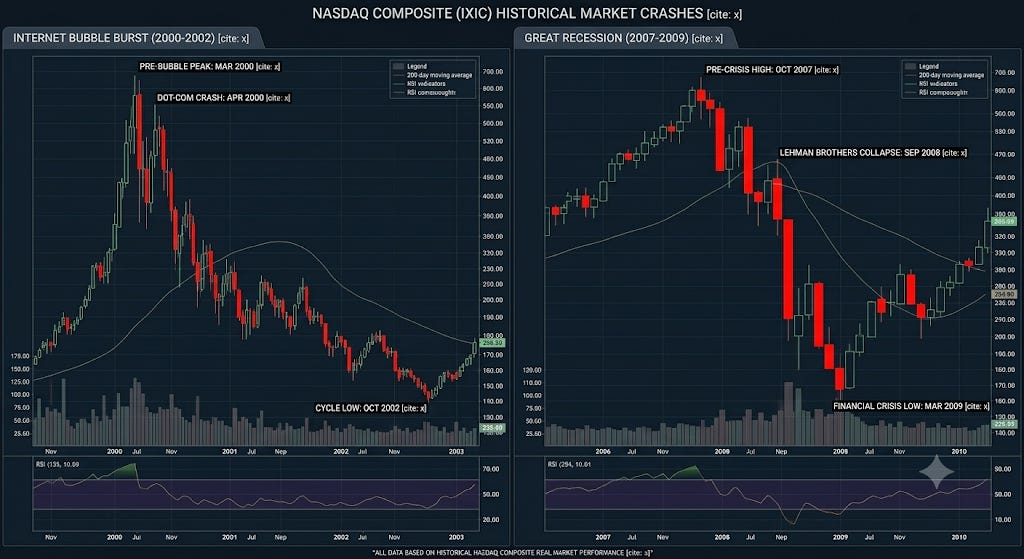
How forgetful is the majority? They only remember the Nasdaq plummeting 80% in 2000, while completely blanking on the actual details of history.
Take Amazon, the quintessential poster child of that crash. Its stock cratered from $106 to under $6, a brutal 94% drop, leading Wall Street to pronounce it dead on arrival. The result? Jeff Bezos pulled AWS out of the ashes, completely redesigning the infrastructure of the modern internet.
Or look at Excite@Home, a tech star once valued at $350 million that lost 99.9% of its value and went belly up when the bubble burst. Yet after it collapsed, the massive fiber-optic backbone and broadband access architecture it had single-handedly laid down was bought up for pennies on the dollar by telecom giants, effectively jump-starting the high-speed broadband ecosystem across the entire United States. And resting on the corpse of that very company is a historical irony sharp enough to leave anyone stunned: in 1999, two young guys named Larry Page and Sergey Brin offered to sell Google to Excite for $750,000. They were arrogantly turned down. Excite vanished into ash; Google stood on its bones and conquered the world.
These two historical deep-cuts, forgotten by most, teach us an indelible lesson: short-term market spasms and elite media pile-ons are merely sound and fury. Even after the most catastrophic market collapses, the disruptive innovations that truly represent the direction of human productivity will see their seeds and skeletal remains birth the next generation of titans ruling the earth.
Enough has been said; we can just about wrap things up here.
My point is this: Musk belongs to the world, yes, but he belongs to America first. He absolutely does not belong to China. America, through this system of insanely rewarding disruptive innovation, has once again positioned itself as the absolute vanguard of external exploration. In this long-drawn-out standoff, this new breed of Silicon Valley titans representing America’s fresh industrial core is the definitive engine that will help America secure ultimate victory.
This reality seems to be something the political Right picked up on instantly. Many are busy condemning Musk’s collusion with the Right, charting his “betrayal” as he swung from Left to Right, even though he has explained the transition clearly enough himself.
Right here, I want to clearly point out the intellectual blunder the American Left is making: when it comes to SpaceX and Musk, their hysterical encirclement and moral tribunals are triggering an incredibly dangerous side effect. They are single-handedly driving the new Silicon Valley elite—represented by Musk and Peter Thiel, the very men who hold the keys to America’s hard industries and AI infrastructure for the next twenty years—systematically and en masse into the right-wing camp. At a critical juncture of prolonged, great-power competition, fracturing your own core technological power for the sake of domestic political theater is a profound, unmitigated intellectual blunder.
Note: This article was written over the weekend. In the days since, SpaceX's valuation has already leaped to $2.6 trillion. This recent surge does not change any of the analysis or perspectives presented herein.