

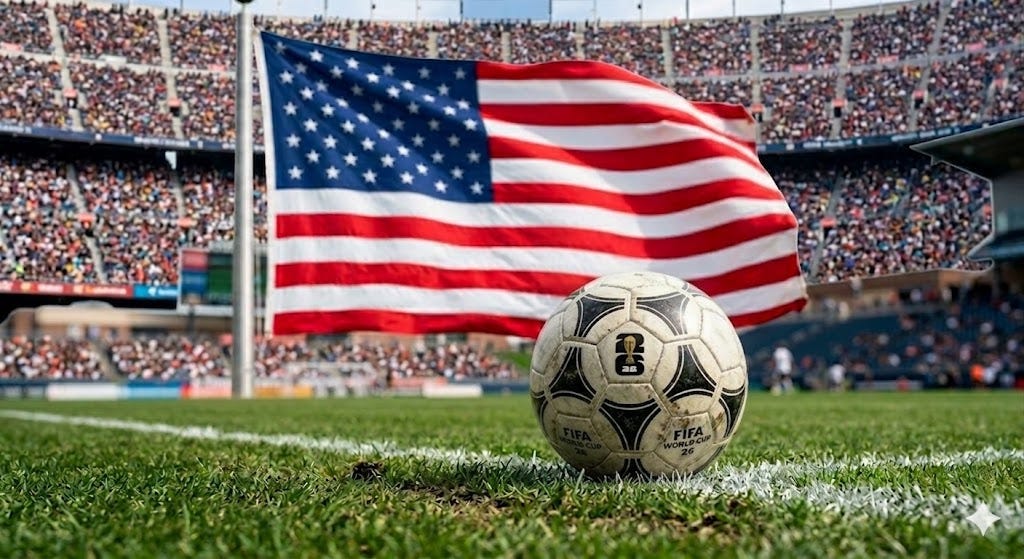
Readers of my previous essays know one thing for certain: while Chinese people aren’t particularly good at playing football—the national team couldn’t even qualify for the tournament—Chinese fans are insanely passionate about the sport. But in the summer of 2026, let me tell you, Beijing treated the North American World Cup with a hilarious level of cold detachment and restraint.
The official logic wasn’t hard to figure out: the match kickoff times were brutal, landing squarely between 1:00 AM and 6:00 AM. Geopolitical friction with Washington was still lingering. The domestic economy was preaching austerity and “belt-tightening.” To top it all off, China’s national team was so utterly disastrous that they couldn’t even make the cut, leaving zero room for a top-down, patriotic narrative about “the great national rejuvenation.”
So, state TV aired the games, but the official propaganda machine went almost completely quiet. In fact, state broadcasters even engaged in subtle filtering—like downplaying or quietly cutting away from Shakira’s explosive halftime performance, despite her massive popularity and huge fan base across China. The official mandate was clear: watch the games quietly, sleep early, and go to work the next morning.
Except the state planners forgot one minor detail: you can’t stop hundreds of millions of Chinese fans with smartphones from letting their eyes drift away from Mbappé and Haaland, and focusing squarely on the background.
As the tournament progressed, the chatter across Chinese social media—from RedNote to Douyin—took a fascinating detour. Besides keeping track of who scored, viewers began obsessing over the host cities, the stadium engineering, and the packed crowds sitting in the stands.
What followed was a subtle, weirdly hilarious psychological explosion across the Chinese internet.
In many ways, this reaction mirrored what foreign tourists from Japan or Europe felt when they stepped out of stadiums in Texas or California. For years, global headlines—dominated by political circus and hyper-partisan doom-mongering—had convinced everyone that America was a collapsing empire with rotting infrastructure. Then you actually see the sheer scale of the country: the sprawling venues, the giant parking lots, the absurd fast-food portions, and the limitless supply of cold beer. You are forced to admit a simple truth: America is still America. That broad, effortless, almost wasteful material abundance is still something that makes outsiders deeply envious.
Inside China’s digital space, this envy triggered two massive cognitive shocks.
The first shock was the sudden collapse of the “Infrastructure King” complex.
Years of genuine domestic achievement—China’s high-speed rail network is undeniably impressive—combined with relentless official messaging had convinced most Chinese people that American infrastructure was a broken relic. “They can’t even build a single high-speed train, so their stadiums must be falling apart!”
Then the World Cup broadcast hit the screen.
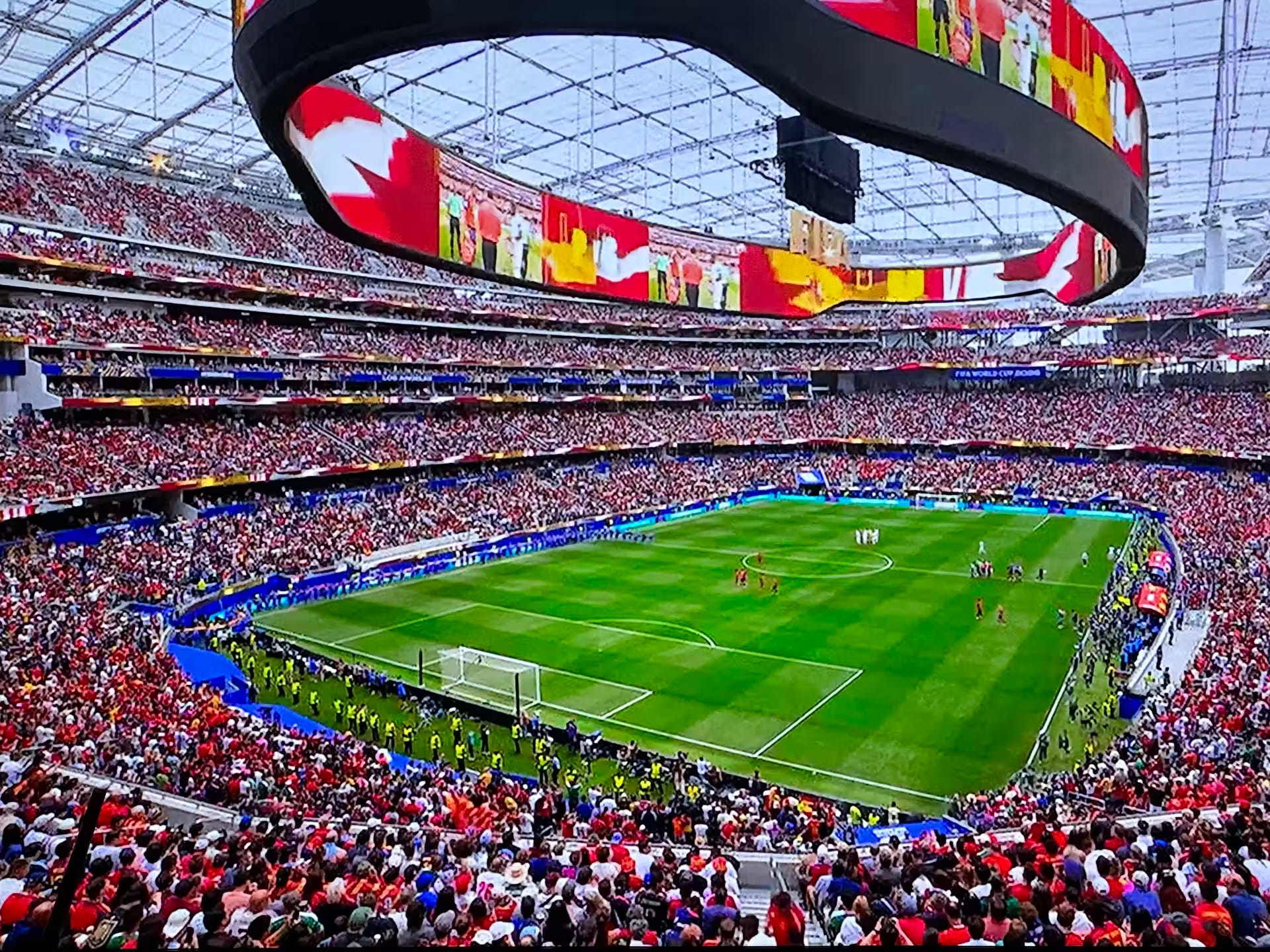
Fans looked at SoFi Stadium in Los Angeles—a $5-billion-plus marvel with a 2.2-million-pound, dual-sided 4K screen hanging from the roof.
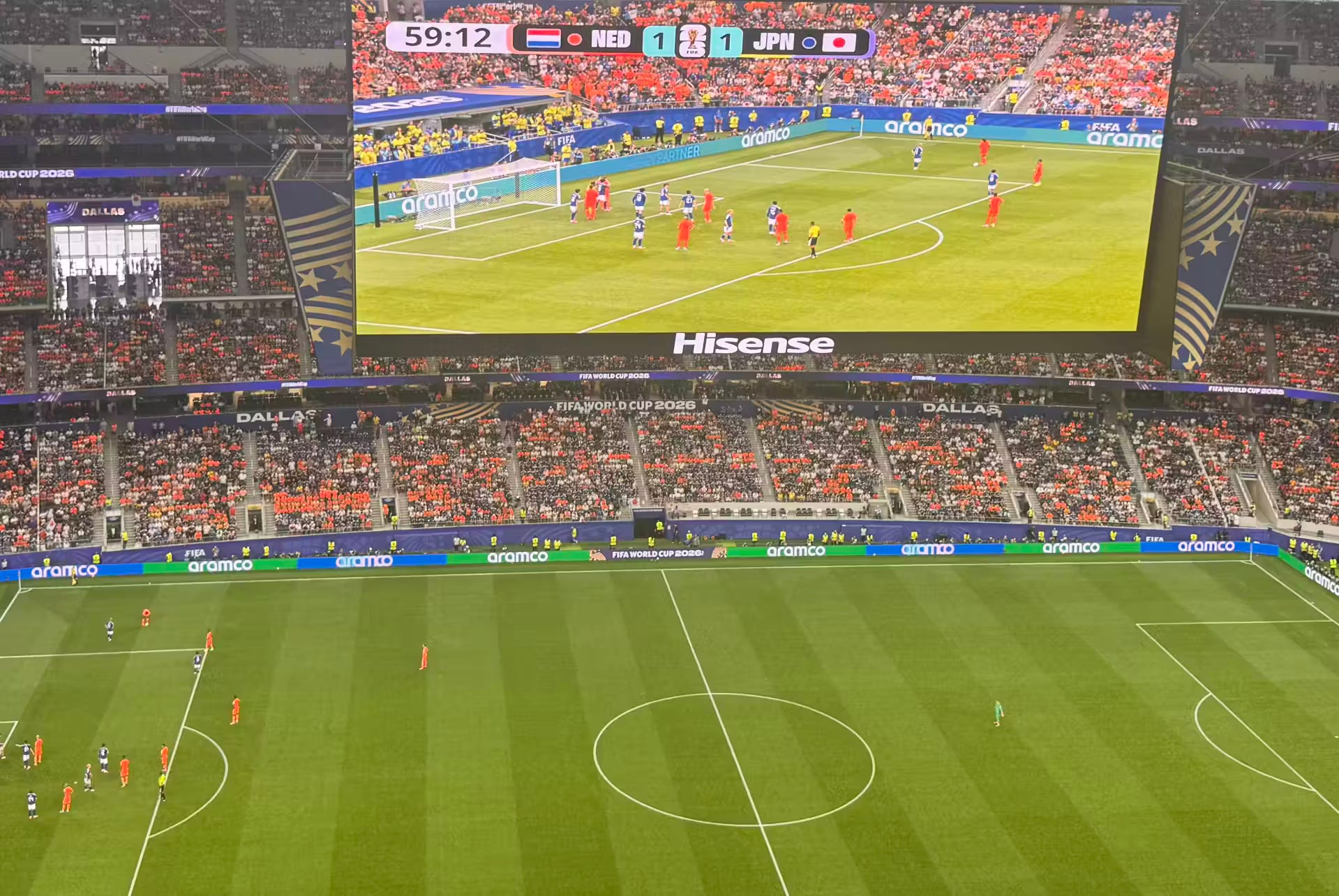
They looked at AT&T Stadium in Dallas, with its sprawling retractable roof and massive HD video board spanning almost the entire length of the field.
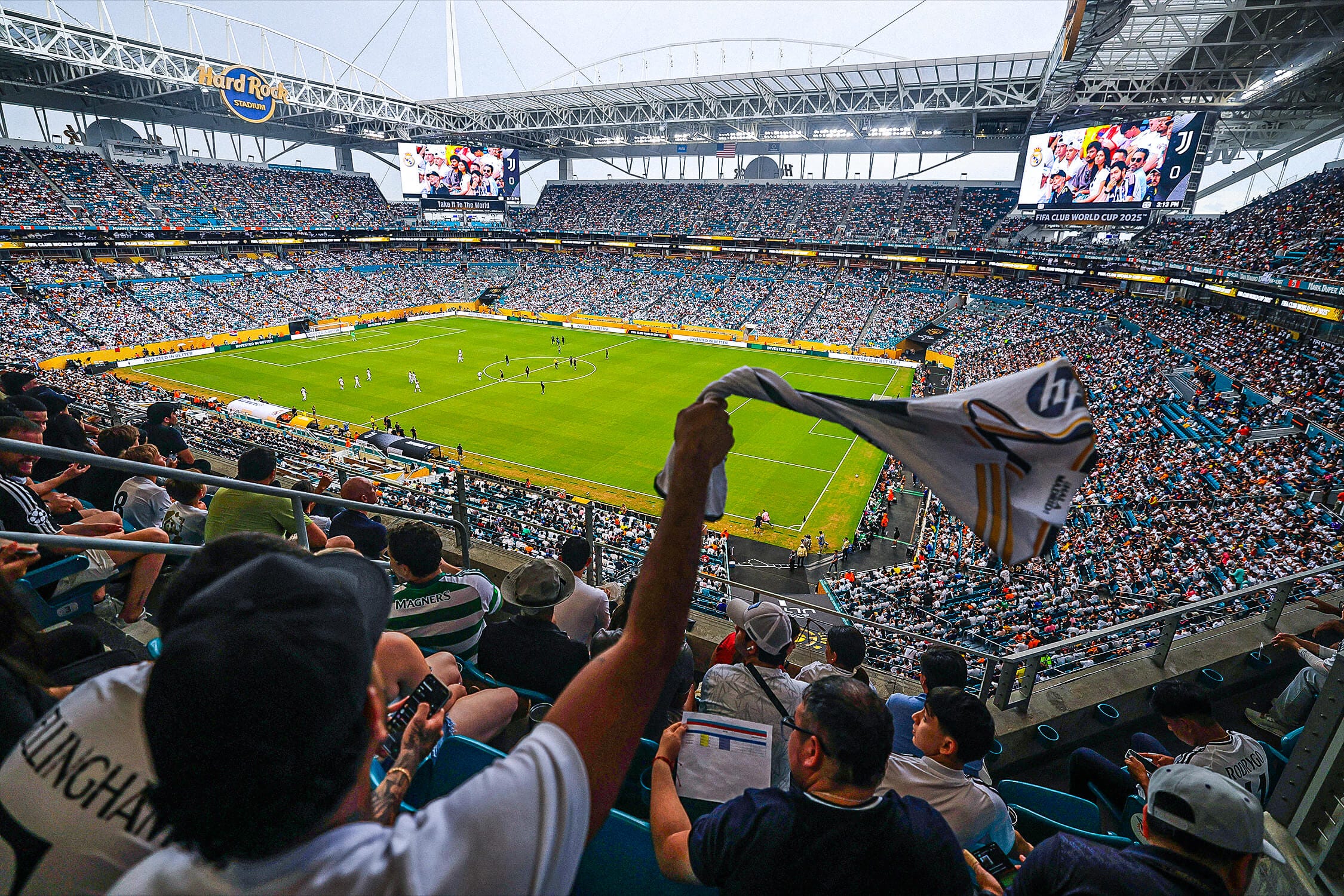
They looked at the newly renovated Hard Rock Stadium in Miami, with its decadent VIP suites and sleek canopy design.
Chinese sports fans were stunned. It turns out America isn’t incapable of building top-tier infrastructure; they just pour their capital and engineering muscle into hyper-commercialized, insanely lucrative entertainment machines. The sheer competence and ease with which North America hosts events on this scale left Chinese social media completely speechless.
The second shock was the crumbling script that “ordinary Americans are too broke to afford basic life.”
In the script favored by domestic nationalist influencers—those conspiracy-theory creators who make a living predicting America’s imminent downfall—ordinary Americans are living in an apocalyptic landscape of runaway inflation and crippling debt, unable to pull together even a few hundred bucks for an emergency.
Then came the ticket prices. Group-stage tickets were running hundreds of dollars; knockouts were pushing thousands.
Chinese netizens waited for the stadiums to look empty. Instead, every single venue was packed to the brim. Tens of thousands of regular Americans were sitting there match after match, drinking $15 beers, wearing expensive jerseys, and partying like there was no tomorrow.
The obvious disposable income and staggering consumer vitality of the American public smashed the domestic doom-and-gloom narrative into pieces.
Predictably, a quiet wave of “explainer” videos started trending across Chinese platforms. Tech-savvy creators and traveled commentators began posting videos breaking down the engineering marvels behind these NFL stadiums, their insane revenue-generating capacity, and the deeply ingrained American obsession with sports and fitness. Because these videos were strictly framed as “objective sports coverage,” they bypassed censorship entirely.
The real magic, however, was in the comment sections.
Thousands of comments turned into an arena of quiet irony and deep reflection:
“I thought people over there were starving—who are these 80,000 people in the stands?”
“Wait, they have air conditioning in this stadium?”
“So this is what real consumer power looks like in a modern society...”
“Thank you to the creator for letting me see the real world.”
It’s almost surreal. It’s 2026. Everyone has a smartphone and high-speed internet. Information on American sports has always been available. Yet, a broadcast of a few stadium crowds was enough to trigger a cultural shock—as if people were suddenly catching a glimpse of the outside world through a crack in a high wall.
Here is the irony: Americans themselves probably have no idea any of this is happening.
During the first week of the tournament, TikTok was flooded with videos of Japanese and European tourists expressing genuine awe over simple things—like the sheer scale of an American Taco Bell or the friendly atmosphere around tailgate parties. Those clips went viral in the US almost instantly. My American friends and colleagues were enthusiastically talking about them, clearly buoyed by the unexpected praise from foreign visitors.
But the glowing reviews coming from millions of Chinese netizens on the other side of the firewall? They remain totally invisible to the American public.
And that’s a shame, because Americans should feel proud of this.
In a weird way, these Chinese observers stumbled upon one of America’s greatest systemic strengths: almost none of these magnificent, world-class stadiums were built using federal tax dollars. They were financed by private capital, driven by market demand, and sustained by a culture that genuinely values sports and entertainment. The massive economic spillovers—from hotel bookings and restaurant bills to eye-watering tips—are just the icing on the cake.
More than the money, though, this kind of praise from strangers offers something America desperately needs right now: a reality check.
American society has spent the last few years consumed by political polarization, anxiety, and an endless internal hum about its own decline. Seeing foreign visitors—and millions of viewers in China—gawk in awe at American infrastructure and consumer vitality might be just the thing to pull the country out of its doom-loop and inject some much-needed perspective.
If you ask me what my takeaway is, it’s simple: America should bid for every single Olympic Games and World Cup it can get its hands on. Beyond LA 2028, keep them coming. The stadiums are already built. The world wants to see them. And sometimes, it takes a stranger to remind you just how good of a hand you’re actually holding.