

On the evening of May 14, 2026, inside the Golden Hall of the Great Hall of the People in Beijing, U.S. President Donald Trump raised his glass at the welcoming state banquet and delivered a speech that, in both historical depth and geopolitical nuance, could be described as scholarly.
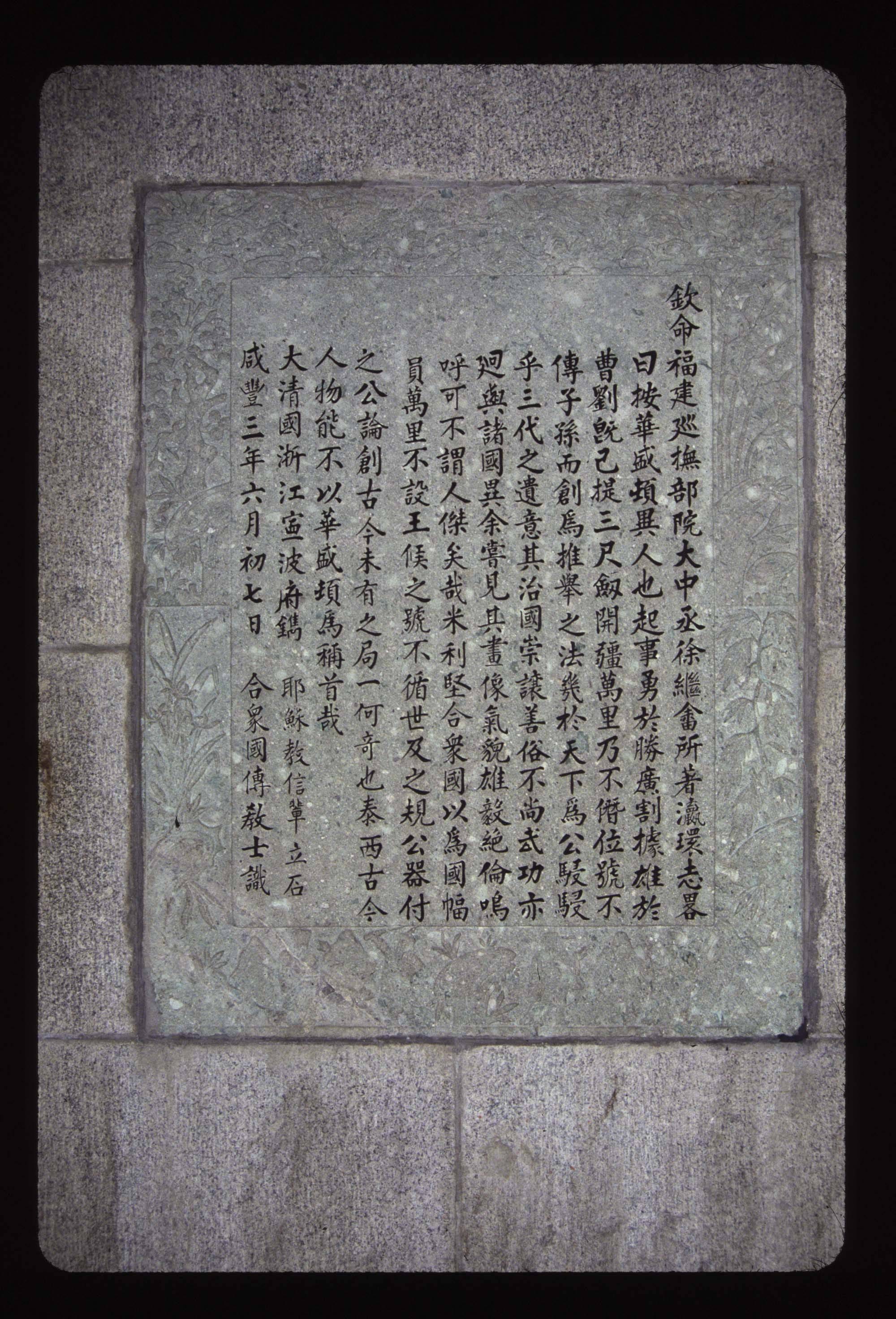
The academic caliber and archival depth of the address were, frankly, exceptionally rare among the elites of both nations. Many of the historical facts cited were so obscure and microscopic that they remain almost entirely absent from the collective knowledge of the general public in both countries. A prime example was the mention of a particular Chinese stone tablet embedded inside the Washington Monument—it is no exaggeration to say that 99.9% of contemporary Chinese people have never heard of its existence.
Were the attendees—especially the contemporary Chinese audience sitting in the banquet hall that evening—to have the opportunity to read the complete history reconstructed in this article, it is difficult to predict what thoughts and emotions would stir in the depths of their minds.
This is the story of that stone, and the solitary pursuit of common sense and its subsequent cost that lies beneath it.
I. An Obscure Tribute: The 1853 Granite Block
Embedded quietly into the interior wall of the Washington Monument shaft, at the tenth-level landing approximately 220 feet above the ground, sits a granite stone measuring three and a half feet long, two feet wide, and six inches thick.
When this stone arrived in the United States in 1853, the Qing Imperial Court in Beijing was completely unaware of it. It was not an official diplomatic gift. Instead, it was organized, carved, and shipped to America through the private funding and coordination of a small circle of early Chinese Christians in the treaty port of Ningbo, assisted by the American missionary W.A.P. Martin.
The text inscribed on the stone was excerpted from a newly published world geography treatise titled Yinghuan Zhilue (瀛寰志略, A Brief Survey of the Maritime Circuit). To help 19th-century Westerners understand the inscription, contemporary sinologists and diplomats left a brief translation and commentary in the official monument archives. Interestingly, this translation reveals a crude yet deeply fascinating misalignment of historical coordinates during this early Sino-Western intellectual encounter.
According to Western annotations of the period, the author of the text relied on traditional Chinese historical archetypes to interpret and contextualize the founders of the thirteen American colonies. For instance, the text analogized Washington’s leadership of the Continental Army against the British Empire to the peasant uprisings of the late Qin Dynasty. It went on to describe the union of the independent states as a variation of the warlord partitions during the late Eastern Han Dynasty.
Yet, through these localized and unrefined analogies, the text ultimately arrived at a conclusion that was revolutionary for its time:
“After establishing the nation, Washington refused to accept a royal title, declined to establish a hereditary succession, and instead instituted a system of electing a president”.
This political magnanimity of treating the state as a public instrument, the text concluded, elevated him above all the ancient sage-kings of Chinese history.
II. The Cost of Seeking Truth: A Mandarin Who Never Went Abroad
The author of these few hundred words was Xu Jiyu (徐继畬). When he penned them, he had never set foot outside of China.
Between 1844 and 1848, while serving as the imperial Financial Commissioner and later Governor of Fujian province, Xu was tasked with managing foreign and trade affairs in the wake of the First Opium War. During this tenure, this traditional scholar-bureaucrat, clad in formal Qing court robes, demonstrated an exceptionally rare obsession with empirical truth.
Determined to understand what the world outside actually looked like, he set aside the arrogance of the Celestial Empire and the rigid boundaries of official protocol. Changing into plain clothes, he went in person to knock on the doors of foreign missionaries, such as the American David Abeel. In his coastal offices, Xu had English maps and dispatches translated for him sentence by sentence, cross-referencing and verifying the data with a writing brush on traditional rice paper. Ultimately, entirely out of personal intellectual curiosity and without state sponsorship, he hand-drew some of China’s earliest spherical world maps and compiled his findings into Yinghuan Zhilue. Beneath a completely sealed iron curtain of information, he used his own physical labor to carve a rift of common sense into a rigid imperial structure.
However, the price of common sense in that era was steep.
In 1851, just as the granite block was being prepared for its journey from Ningbo to America, Xu’s objective depiction of Western political systems—particularly his high praise for Washington’s refusal to establish a monarchy—drew fierce condemnation from hardline factions within the imperial court. He was accused of “praising foreigners” and “injuring the dignity of the Great Qing State.”
Shortly thereafter, Xu was stripped of his governorship and banished from the center of power. His political career was brought to an abrupt halt.
III. The Synchronization of Domestic Slaughter: A Plain Layout of Historical Absurdity
As this stone praising “republicanism and peace” was being set into the wall of the Washington Monument, history drifted into a cold deadlock. From the arrival of the stone in America (1853) to the moment it was resurrected in diplomatic channels (1867), both sides of the ocean were simultaneously dragged into the most violent domestic vortexes of the 19th century.
The parallel historical data from this period can be laid out entirely without emotional color:
On the American axis:
In 1861, the American Civil War erupted. Over four years of industrialized carnage, the conflict resulted in the deaths of approximately 620,000 to 750,000 soldiers. This casualty figure exceeded the combined total of all American military deaths in every subsequent foreign war, including World War I, World War II, the Korean War, and the Vietnam War.
On the synchronized Chinese axis:
Almost exactly during the same years (1851–1864), southern China was engulfed by the Taiping Rebellion. In this fanatical civil war and the subsequent imperial campaigns of suppression, the demographic collapse driven by targeted massacres, scorched-earth campaigns, and wartime famines resulted in an estimated 20 million to 100 million non-normal deaths.
Amidst these two massive domestic wars, the Qing Empire was also subjected to the Second Opium War. In 1860, Anglo-French forces marched into Beijing and put the Old Summer Palace (Yuanmingyuan)—the absolute pinnacle of imperial aesthetics and architectural labor—to the torch. The Xianfeng Emperor fled in terror through the smoke to the imperial retreat at Rehe, where he died in illness and distress the following year.
The grand narratives on both sides of the ocean at this moment consisted of nothing but bones and ashes.
IV. A Belated Gaze: The Presentation of the Portrait at the Zongli Yamen
It was not until 1867 that the geopolitical radar shifted once again. With the rise of the Self-Strengthening Movement during the Tongzhi reign, the elderly Xu Jiyu was recalled to public service by the Qing court and appointed to the newly formed foreign ministry, the Zongli Yamen.
Anson Burlingame, the American Minister to China active in Beijing at the time, had previously seen the Chinese inscription inside the Washington Monument with his own eyes. Upon learning that the author of those words had returned to public life, Burlingame commissioned a full-scale oil copy of the official portrait of George Washington painted by Gilbert Stuart, which hung in the White House.
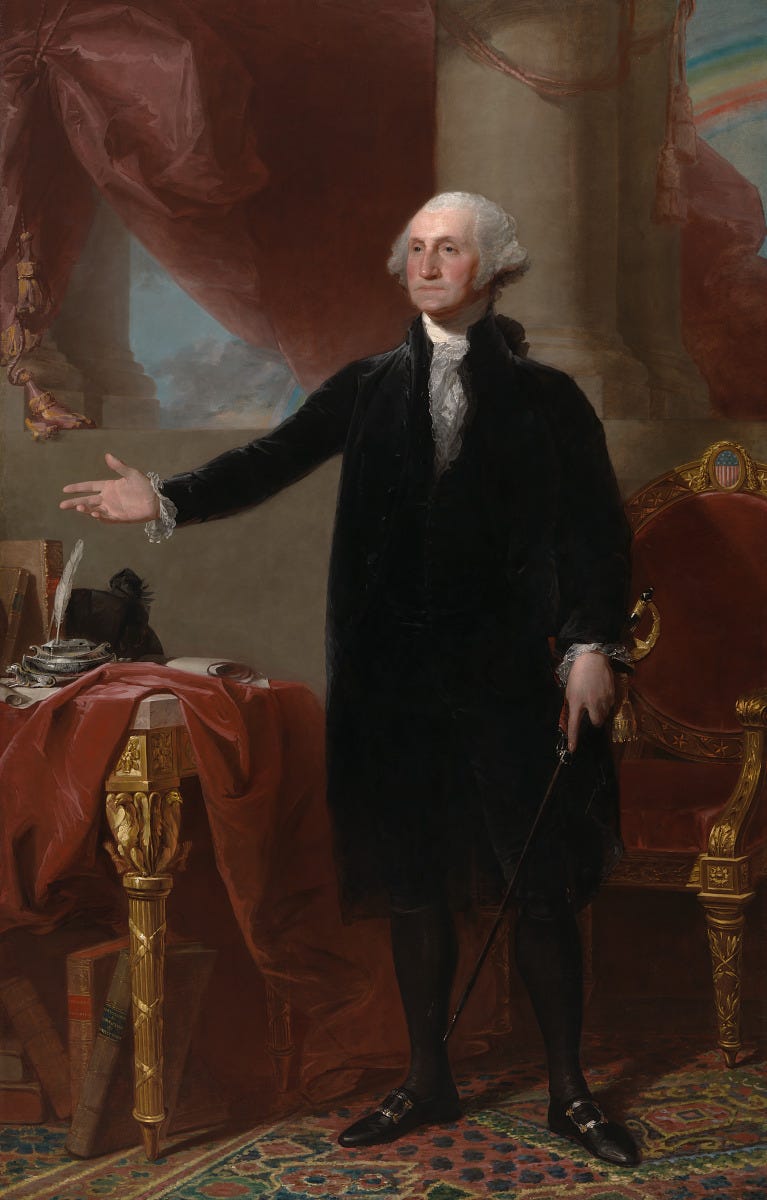
On October 21, 1867, a formal diplomatic ceremony was convened at the Zongli Yamen in Beijing. Burlingame presented the portrait to the 85-year-old Xu Jiyu on behalf of the United States government. The official dispatches of both nations recorded this highly dramatic moment: an aging mandarin, who had lost his political career for praising George Washington, stood in his twilight years after surviving the burning of his empire and the devastation of two domestic wars, finally exchanging a physical gaze with the Western “extraordinary man” in the oil painting.
V. The Dissolution of the Network: The Repercussions of 1900
Yet, the story did not reach a warm conclusion in the high light of diplomacy.
Thirty-three years later, in the summer of 1900, the violent thunderstorm of the grand narrative—the Boxer Uprising—swept across China. Although the Boxer fury was primarily concentrated in Northern China—where the devastation was a hundred times worse—the fires of anti-foreign and anti-Christian violence still traveled down the Yangtze River and along the coast, striking the exact microscopic origin of this story: Ningbo, Zhejiang.
According to the archival records of the China Inland Mission and the Presbyterian Church, mobs descended upon the Ningbo prefecture and its surrounding villages in the summer of 1900. The early Chinese Christian network that had funded, typeset, and printed Yinghuan Zhilue, and whose hands had physically chiseled the stone block for the Washington Monument, met its ultimate end.
Over 400 local Christian families in the Ningbo area had their homes and properties systematically plundered and burned to the ground. To escape indiscriminate violence, groups of native converts fled together into the rugged coastal mountains and caves nearby. In the extreme heat of that summer, driven by terror, lack of water, and prolonged starvation, dozens of these individuals died in the wilderness.
The microscopic, transnational network woven decades prior at a treaty port with writing brushes, carving knives, and common sense was thoroughly crushed by the tracks of grand history.
Today, that stone still rests quietly inside the tenth-level wall of that soaring stone obelisk in the center of Washington, D.C.
If you found value in this deep dive into the microscopic frictions of history and institutional dynamics, consider subscribing to ChienInsights.
This publication is entirely reader-supported, dedicated to unpacking the chaotic forces reshaping our world through the rigorous lens of applied history and clinical institutional analysis. By subscribing, you ensure this independent research remains sustainable and compromises on nothing.
Thank you for reading, and for standing in the gap between civilizations with us.
Historical Sources and Archival References
The micro-historical narrative reconstructed above is verified by the following primary source documents, state dispatches, and missionary archives:
The Inscription & Monument Records: The physical existence and official translation of the 1853 Ningbo stone are documented in the National Park Service (NPS) Archive for the Washington Monument (Staff Wall Inscriptions) and early records compiled by the Washington National Monument Society.
The Text & Methodology of Xu Jiyu: The original line-drawn maps, geographical data, and commentary on George Washington are preserved in the 1848 Fujian imperial block-printed edition of Yinghuan Zhilue (A Brief Survey of the Maritime Circuit) by Xu Jiyu. Xu’s private interviews and intellectual collaboration with American missionary David Abeel are detailed in Abeel’s personal journals and correspondence (1844–1846).
The 1867 Diplomatic Ceremony: The presentation of the Gilbert Stuart portrait copy to Xu Jiyu at the Zongli Yamen is verified by Papers Relating to Foreign Affairs, Accompanying the Annual Message of the President to the Second Session of the Fortieth Congress (U.S. Department of State, 1868, Diplomatic Correspondence: China), as well as the imperial logs of the Zongli Yamen.
The 1900 Ningbo Church Demolition: The micro-level casualties and property destruction within the native Christian network of Ningbo during the Boxer Uprising are sourced from the China Inland Mission (CIM) Casualties and Damage Reports (1900) and the localized archival registers of the American Presbyterian Mission in Zhejiang.