

Introduction
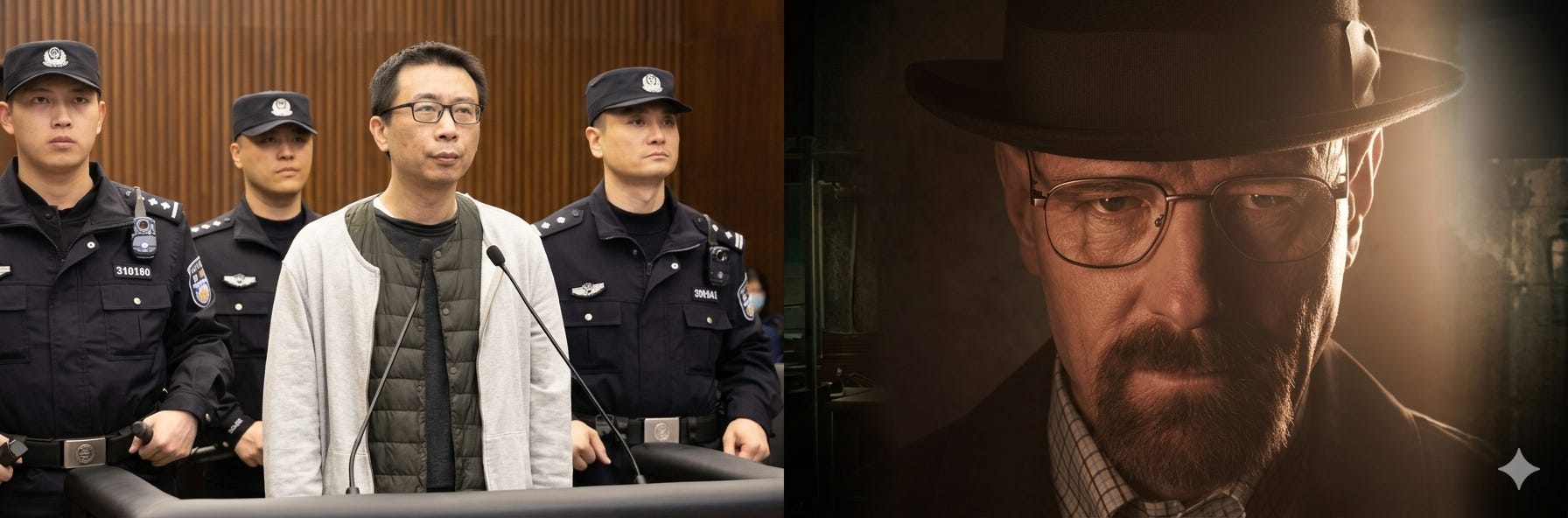
In late May 2026, a terse bulletin from a Shanghai court brought a final, grim closure to a corporate bloodbath that reads like a dark-comedy thriller: the former tech CEO who meticulously planned and executed the poisoning of the founder of the 3-Body Problem universe has finally been executed.
Sophon’s Earthly Agents: The Cursed Megahit
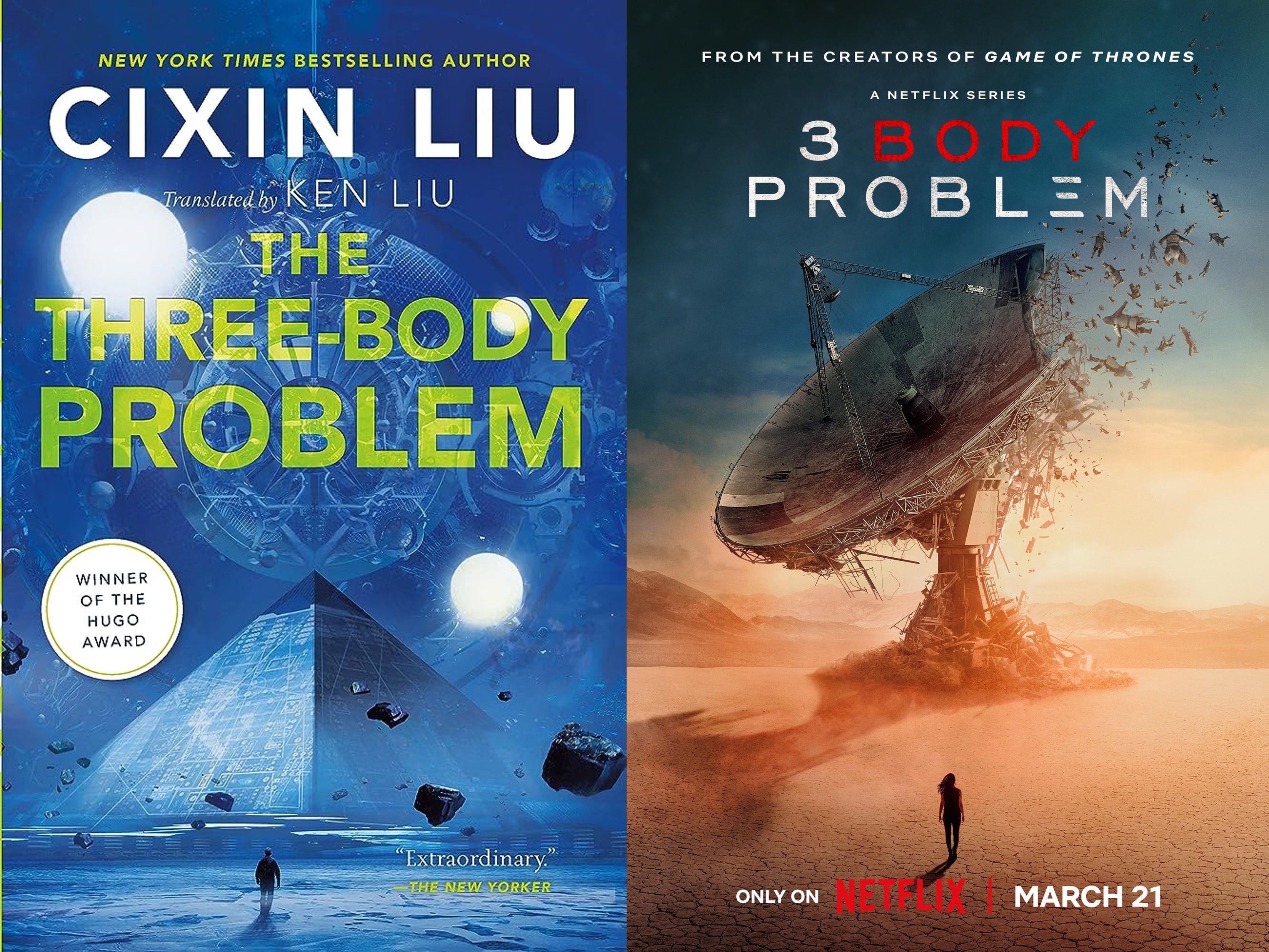
Before diving into the mechanics of this bizarre murder, we need to talk about the monolithic sci-fi masterpiece behind it: The Three-Body Problem.
A cultural phenomenon that single-handedly catapulted Chinese science fiction to the global center stage, Liu Cixin’s trilogy swept nearly every major international sci-fi accolade, including the prestigious Hugo Award. Its roster of hardcore fans famously includes former U.S. President Barack Obama (who reportedly utilized White House privileges to secure unreleased English galley proofs just to avoid waiting for publication).
This vast universe of alien civilisations, cosmic sociology, and dimensional strikes matches the narrative scale of Star Wars or Marvel. Naturally, it earned a reputation for being entirely unfilmable. In recent years, a domestic Chinese series hit the screens, followed by a massive, high-budget adaptation by Netflix. Did you like them? If you found them somewhat underwhelming, you’re in good company—hardcore fans generally agree that both screen adaptations barely scratch a passing grade compared to the sheer depth of the novels.
Yet, if the book’s cosmic axiom—“If I destroy you, what business is it of yours?”—chills you to the bone, you would scarcely believe that the real-world corporate warfare over its copyright was just as cutthroat, ruthless, and absurd as the novel’s “Dark Forest” law.
The Copyright Hoarders, The Dreamer, and The Elite Lawyer
From its inception, the cinematic fate of this magnificent IP was plagued by historical bad luck.
Back around 2009, long before the books broke into the global mainstream, a remarkably mediocre domestic director couple recognized the potential early. They bought the exclusive film adaptation rights from the humble, unassuming Liu Cixin for a laughably low sum—rumored to be anywhere between $15,000 and $150,000 USD. Within years, as tech giants and Hollywood executives realized 3-Body was a multi-billion-dollar goldmine, billionaires arrived with briefcases of cash. But this couple hoarded the rights, demanding astronomical sums while stubbornly insisting they must direct the film themselves, causing the project to rot in development hell for years.
The deadlock was broken by a young billionaire named Lin Qi.
As the founder of the gaming behemoth Yoozoo Games, Lin was a wealthy, wildly ambitious tech mogul with a distinct streak of idealism. In 2014, after a brutal, exhausting round of corporate negotiations, Lin dropped a staggering 120 million RMB (roughly $19 million USD) to pry the full rights away from the hoarding couple, establishing a dedicated entity called “The Three-Body Universe.” Lin’s dream was massive: he wanted to turn 3-Body into China’s Star Wars, a global pop-culture empire.
To execute this grand blueprinted reality, Lin recruited a heavy-hitting partner in 2017—the protagonist of our grim tale, Xu Yao.
Before entering the sci-fi arena, Xu was the epitome of an elite corporate lawyer, holding prestigious overseas legal degrees and climbing the ranks of multi-national conglomerates. As the newly appointed CEO of Three-Body Universe, Xu delivered results. Utilizing his deep legal acumen, he streamlined the incredibly messy global copyright architecture and personally negotiated the landmark multi-million-dollar distribution deal with Netflix.
Had the story ended there, it would have been a textbook corporate success story—the visionary tech mogul and his star attorney conquering Hollywood. But things soured when the legal elite and his boss hit a fundamental clash.
Breaking Bad in the C-Suite
As the cinematic machine rolled forward, Lin Qi grew frustrated with Xu Yao, concluding that his partner was “brilliant with contracts, but clueless about actual filmmaking.” In the cold theater of venture capitalism, Lin marginalized Xu. He drastically slashed Xu’s salary and transferred the core executive control of the franchise to a rival incoming executive.
For a typical corporate executive, this is the cue to take a lucrative severance package, or perhaps file a massive breach-of-contract lawsuit through standard legal channels.
But Xu Yao, a master of jurisprudence, apparently found the law far too slow. This polished, bespoke-suited corporate lawyer decided to unlock his inner Walter White—not by cooking meth, but by mastering the molecular chemistry of absolute death.
So our bro chose a far more permanent alternative: physical liquidation.
To pull off the hit, this dude exhibited a spine-chilling level of calculated patience. He established a front company in Japan to covertly purchase highly regulated lethal chemicals and rented a secluded, off-grid warehouse lab in the outskirts of Shanghai. He purchased hundreds of textbooks on advanced biochemistry and toxicology, using stray dogs and cats as test subjects to calibrate his lethal concoctions.
Ultimately, he brewed a custom, highly volatile cocktail consisting of tetrodotoxin (pufferfish poison), mercury, and a lethal extract from toxic mushrooms.
Then, our bro meticulously packaged these deadly toxins into ordinary probiotic capsules, custom-pressed Pu-erh tea cakes, and coffee pods. With a polite smile, he placed them directly onto the desks of his boss, Lin Qi, and the rival executive who replaced him.
In December 2020, just after his 39th birthday and at the absolute zenith of his career, billionaire Lin Qi drank the poisoned beverage in his office. He collapsed from acute organ failure and died days later. The rival executive survived by a thread, but was left with permanent, life-altering bodily damage due to mercury levels that exceeded safety limits by dozens of times.
The End: A Poisoned Tea Cake and the Supreme Review
The sheer coldness, meticulous planning, and dark absurdity of the murder left the global tech and sci-fi communities completely stunned. In a twist of grim irony, on the day Netflix triumphantly announced the official casting of The Three-Body Problem, Lin Qi’s name was framed in a black ribbon as a posthumous executive producer, while the poisoning dude was already sitting behind the bars of a Shanghai detention center.
What followed was a protracted march through the Chinese judicial apparatus—a process that reveals an interesting nuance about the country’s legal reality, which often defies Western assumptions:
There is a widespread global stereotype that the Chinese justice system operates solely on “swift trials and immediate executions.” While China remains one of the nations that retains and enforces capital punishment, the legal pathway to an execution has become incredibly restricted, tightly audited, and deliberate over the past two decades.
Since 2007, the power of final death penalty review was clawed back exclusively by the Supreme People’s Court in Beijing. This means that regardless of a local court’s ruling, once the first and second appeals are concluded, every single page of the trial archive is shipped to the capital. Supreme Court justices meticulously re-examine the entire evidence chain. If there is even a minor procedural flaw or a microscopic gap in forensics, the verdict is summarily thrown out.
Consequently, this highly educated legal bro spent nearly six years navigating the system he once masterfully practiced—moving from the initial arrest in 2020, through the first conviction, the second-instance confirmation, and finally, the rigorous gauntlet of the Supreme People’s Court review before the sentence was carried out.
Of course, this meticulous procedural adherence remains a luxury reserved almost exclusively for highly publicized domestic criminal files—a sterile textbook reality that holds true only if one conveniently overlooks the shadow state of extrajudicial detentions, political dissidents held incommunicado, and ideological non-conformists whose fates remain entirely opaque to the outside world.
In The Three-Body Problem, Liu Cixin famously wrote: “Weakness and ignorance are not barriers to survival, but arrogance is.”
The elite lawyer who mastered the law only to utterly despise human life and legal boundaries ultimately authored his own cold, dystopian ending. The poisoned Pu-erh tea cake sitting on the executive desk delivered the ultimate, irreversible dimensional strike on his own existence.